How To Get Elderly Walking Again - An Expert Guide
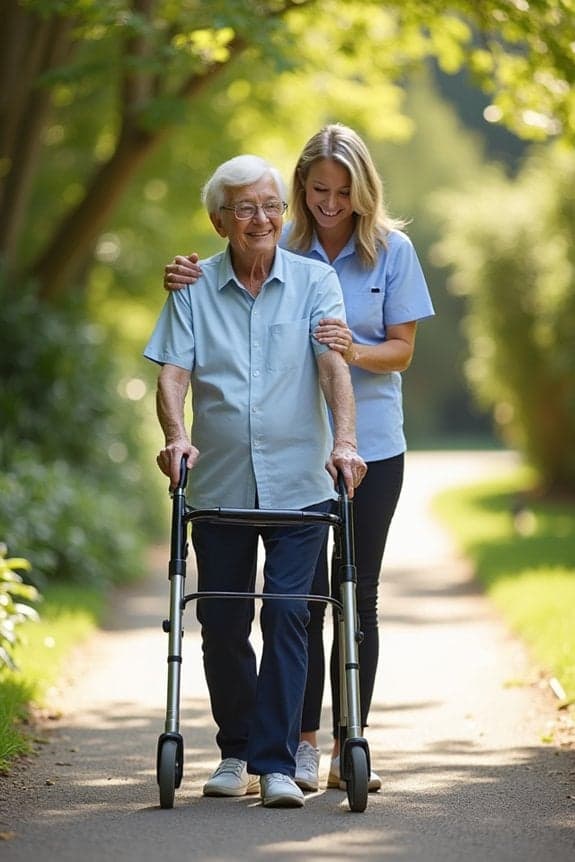
Helping your elderly loved one walk again requires a thoughtful, step-by-step approach that prioritizes safety and builds confidence. Start by creating a safe environment with clear pathways and proper lighting, then focus on seated exercises to rebuild strength. You'll need essential tools like a fitted walker, non-slip shoes, and supportive handrails. With gentle guidance and consistent practice, you can help them shift from seated exercises to supported walking. Let's explore the proven techniques to restore their mobility and independence.
Key Takeaways
- Start with seated exercises like leg lifts and marching movements to build strength before attempting to walk.
- Create a safe environment by removing obstacles, installing handrails, and ensuring proper lighting throughout walking areas.
- Practice transitioning from sitting to standing using proper form and support from sturdy furniture or assistive devices.
- Use appropriate mobility aids like walkers or canes fitted to the correct height for supported walking practice.
- Begin with short, supported walking sessions using parallel bars or caregiver assistance while gradually increasing duration.
Safety Considerations Before Starting
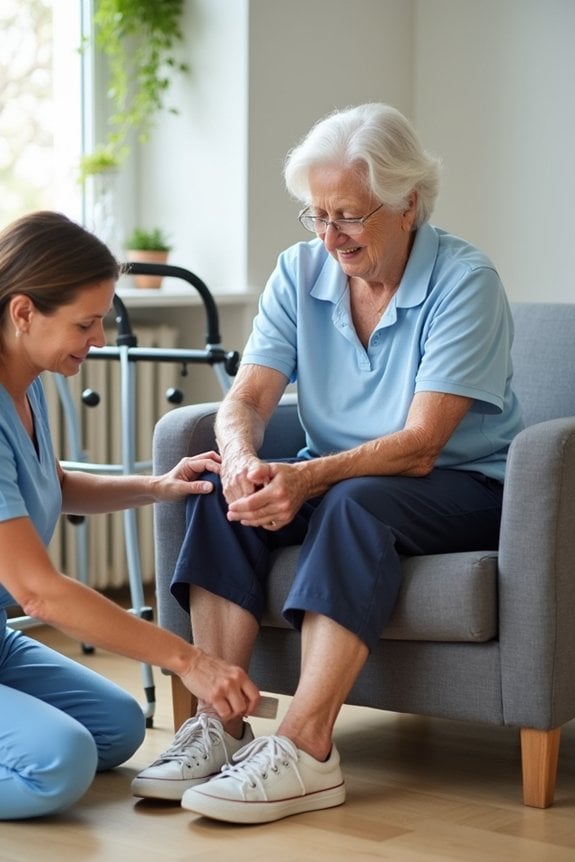
Before helping your elderly loved one start walking again, it's essential to create a safe and supportive environment that minimizes the risk of falls or injuries. Make certain the walking path is clear of obstacles, like loose rugs, electrical cords, or scattered items. Verify there's proper lighting throughout the house, and install handrails in critical areas where your loved one needs extra support. Consider incorporating hip flexor stretches to improve mobility and flexibility before attempting walking exercises. Check with their doctor about any medical conditions, medications, or physical limitations that might affect their mobility. You'll also want to have comfortable, well-fitting shoes with non-slip soles ready, and keep a walking aid nearby if recommended by their healthcare provider.
Essential Equipment and Support Tools
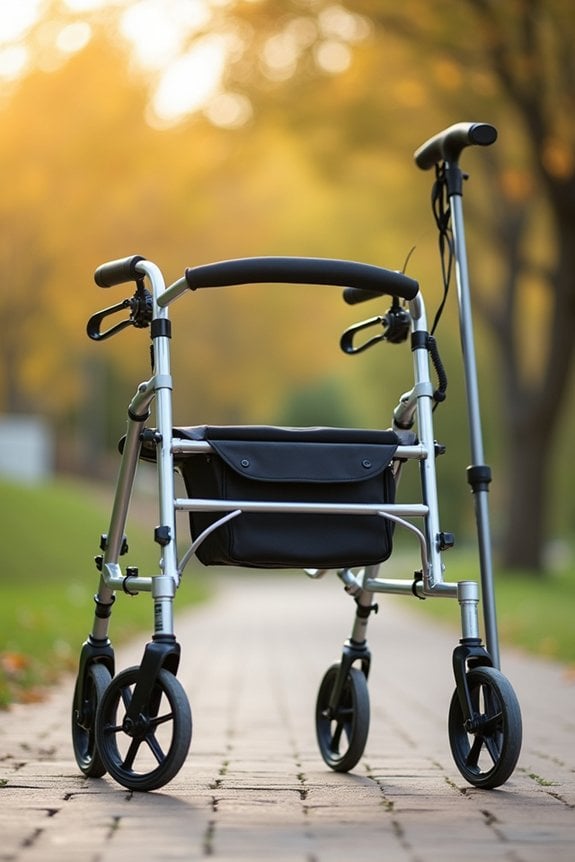
When helping an elderly person regain their ability to walk, having the right equipment and support tools can make all the difference in their recovery journey. You'll need a sturdy walker or cane that's properly fitted to their height, along with non-slip shoes that provide excellent support and stability. Consider investing in a gait belt, which helps you safely assist them during walking practice. You'll also want to have handrails installed in key areas, particularly in bathrooms and hallways. For additional confidence and safety, leg strengthening bands and balance pads can help build their strength gradually. Incorporating dumbbell deadlifts into their routine can significantly improve lower body strength and overall stability while promoting injury prevention.
Seated Strength Building Exercises
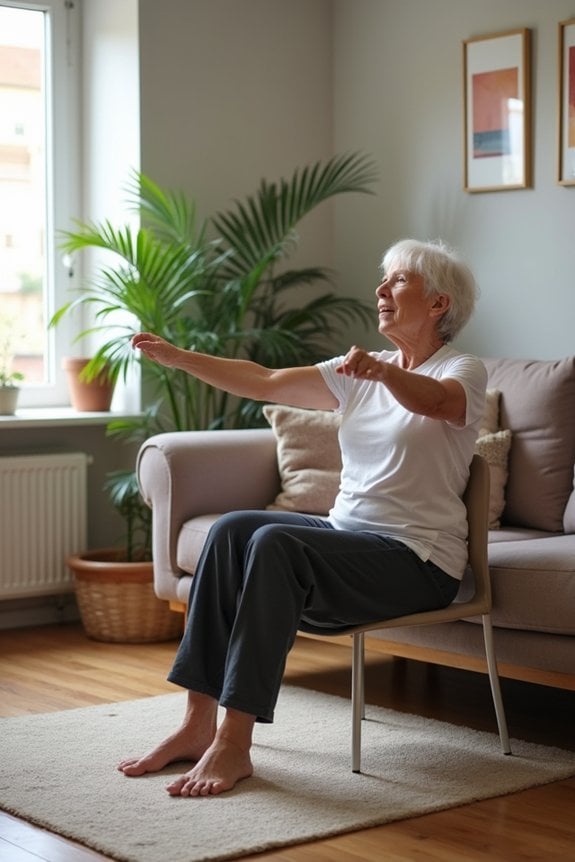
Starting with seated exercises is an excellent way to help elderly individuals rebuild their strength and confidence for walking again. These gentle yet effective movements will help you regain muscle control and stability, setting a strong foundation for future mobility.
- Practice ankle rotations and toe taps to improve foot strength and circulation
- Do seated leg lifts, holding each lift for 5-10 seconds to build thigh muscles
- Perform seated marching movements to strengthen hip flexors and core muscles
- Try arm circles and shoulder rolls to improve overall balance and posture
Similar to how water walking exercises help seniors build strength through natural resistance, these seated movements provide a safe way to rebuild muscle tone gradually.
Transitioning From Sitting to Standing
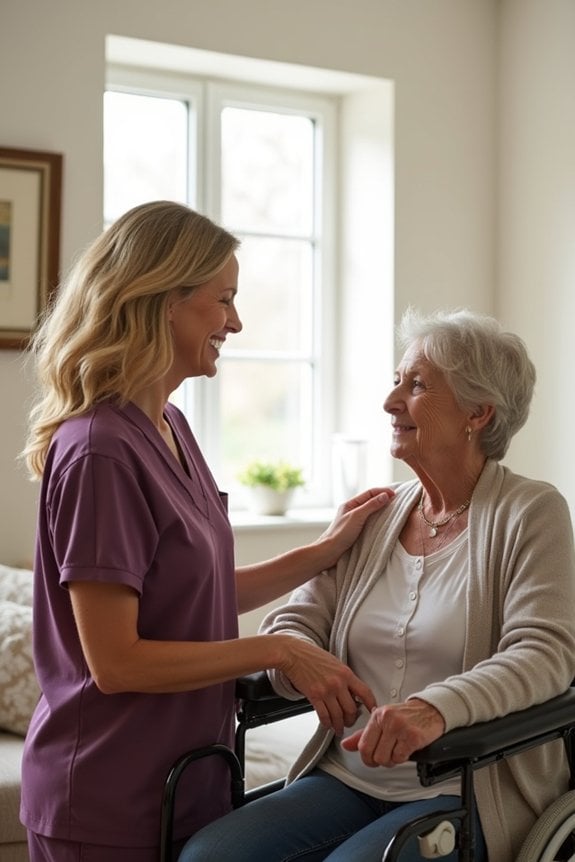
Once you've built confidence with seated exercises, it's time to master the essential skill of standing up safely. Start by positioning yourself at the edge of your chair, with both feet planted firmly on the ground, hip-width apart. Keep your back straight and lean slightly forward.
Place your hands on the chair's armrests or seat edges for support. As you prepare to stand, shift your weight forward over your feet, tighten your stomach muscles, and push through your legs. If you need extra stability, don't hesitate to use a walker or sturdy surface in front of you. Remember, slow and controlled movements are key to success. Regular practice of pelvic tilts while seated can help strengthen your core muscles for a smoother transition to standing.
Supported Walking Techniques

The three most effective supported walking techniques will help you regain your confidence and mobility safely. With proper support and guidance, you'll find these methods both comfortable and empowering as you work toward independent walking.
- Walker-assisted walking: Keep your walker steady, move it forward arm's length, then step toward it while maintaining good posture
- Parallel bar walking: Use both hands on the bars for maximum stability while taking small, controlled steps
- Partner-assisted walking: Have a caregiver stand slightly behind and to your side, supporting your movement
- Gait belt walking: Let a trained helper guide you using a secure belt around your waist
For those requiring additional assistance, robotic lifting aids like Robear can help safely transfer you from bed to a standing position before beginning walking exercises.
Progress Tracking and Goal Setting
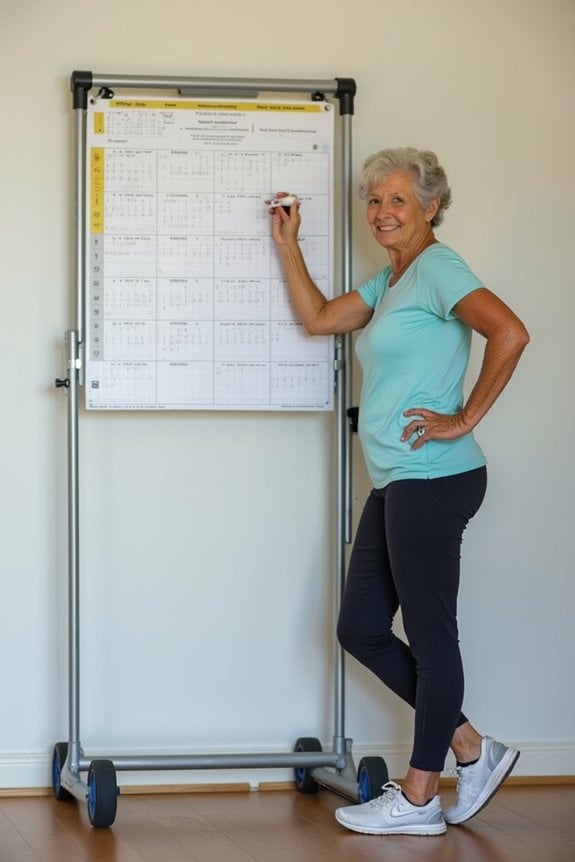
Building on your success with supported walking, monitoring your progress and setting clear goals will keep you moving forward with confidence. You'll feel more motivated when you track your achievements and set realistic milestones for yourself.
| Week | Distance Goal | Achievement |
|---|---|---|
| 1 | 50 feet | Indoor hallway |
| 2 | 100 feet | Around garden |
| 3 | 200 feet | To mailbox |
| 4 | 300 feet | Corner store |
Keep a daily walking journal to record your distance, time spent walking, and how you're feeling. Start with small, achievable goals that you can celebrate, like walking to the kitchen without assistance. As you grow stronger, you'll be amazed at how far you've come!
Frequently Asked Questions
How Long Will It Take Before My Elderly Parent Can Walk Independently?
Like a flower blooming in spring, recovery happens at its own natural pace. You'll need patience, as your parent's journey back to independent walking varies based on their health, previous mobility, and dedication to physical therapy. Most elderly patients take 2-6 weeks to show progress, but it could be 3-4 months before they're walking independently. Don't lose heart - with consistent practice, support, and medical guidance, they'll make steady progress.
Can Medications Affect an Elderly Person's Ability to Regain Walking Skills?
Yes, medications can greatly impact your loved one's ability to walk again. Some medicines, especially those for sleep, anxiety, or blood pressure, might cause dizziness or drowsiness that affects balance. You'll want to talk with their doctor about any side effects you've noticed, as they can adjust dosages or switch to alternatives. It's also helpful to schedule walking practice when medications are least likely to cause drowsiness.
What Role Does Diet Play in Rebuilding Walking Strength?
Your diet plays a crucial role in rebuilding walking strength! You'll need plenty of protein to build muscle, calcium and vitamin D to strengthen bones, and healthy carbs for sustained energy. Focus on lean meats, fish, eggs, dairy products, and colorful fruits and vegetables. Don't forget to drink enough water throughout the day, as staying hydrated helps your muscles work better and prevents fatigue during exercise.
Should Elderly Adults Try Walking Exercises During Specific Times of Day?
You'll find the most success with walking exercises in the mid-morning, typically between 9 AM and 11 AM, when you're naturally more alert and your muscles are warmed up. If that doesn't work for you, early evening walks between 4 PM and 6 PM are another great option. Just avoid walking too late at night or very early morning, as your balance might not be at its best during these times.
How Often Should Elderly Adults Rest Between Walking Practice Sessions?
You'll want to give your body enough time to recover between walking sessions, so it's best to rest for 24-48 hours between practices. If you're just starting out, you might need the full two days to rebuild your strength and prevent overexertion. Listen to your body's signals, and don't hesitate to take an extra day if you're feeling tired or sore. As you get stronger, you can gradually reduce your rest periods.
Keep reading

20 Latest Crochet Neck Warmer Ideas To Try In 2025!
Link up with the 20 best crochet neck warmers that blend warmth and style—discover which designs will transform your winter wardrobe!
20 Amazing Crochet Jewelry Ideas
Amazing crochet jewelry ideas await you, featuring unique designs that will inspire your creativity and elevate your accessory game to new heights.

20 Amazing Crochet Kit Ideas
Navigate through 20 amazing crochet kit ideas that spark creativity and joy; discover the perfect project to ignite your crafting passion!
Need personal guidance?
Talk to an advisor
Our care experts are here to help you make the right choice — for free.