Can You Take A Mobility Scooter On A Plane - An Expert Guide
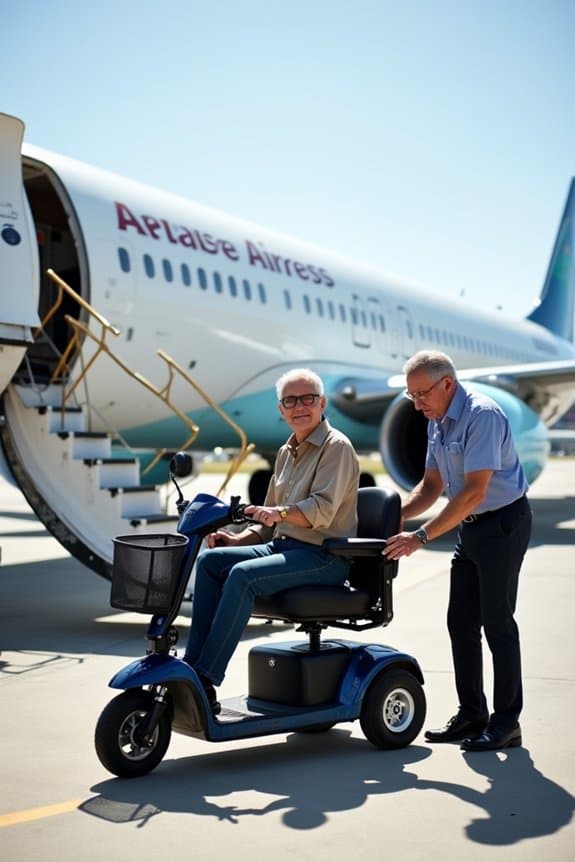
You can absolutely take your mobility scooter on a plane with proper preparation. Airlines require 48-hour advance notice and specific documentation about your scooter's dimensions, weight, and battery type. You'll need to check in early and transfer to an airport wheelchair while your scooter is safely stored in the cargo hold. While the process involves several steps, don't worry - understanding the key requirements will help guarantee a smooth journey ahead.
Key Takeaways
- Yes, mobility scooters are permitted on planes with advance notice of at least 48 hours to the airline.
- Airlines require detailed specifications of your scooter, including dimensions, weight, and battery type for approval.
- Dry and gel-cell batteries are widely accepted, while wet-cell batteries need special handling and leak-proof containers.
- You must transfer to an airport wheelchair during flight, as scooters are stored securely in the cargo hold.
- Prepare documentation including doctor's letter, handling instructions, and properly label battery terminals for security checks.
Airline Regulations and Policies for Mobility Scooters

While traveling by air can feel overwhelming for mobility scooter users, most airlines have established clear policies to make your journey smoother and more accessible. You'll need to notify your airline at least 48 hours before your flight, providing details about your scooter's dimensions, weight, and battery type. Most airlines accept mobility scooters with dry or gel cell batteries, but wet cell batteries require special handling. You'll receive specific instructions for checking in your scooter, and airline staff will assist you in transferring to an airport wheelchair. Remember, your scooter will be safely stored in the cargo hold during the flight. For your safety and peace of mind, always meet in public places when seeking assistance or information about mobility scooter travel from fellow travelers or support groups.
Pre-Flight Planning and Documentation Requirements

Successful air travel with a mobility scooter starts with thorough preparation well before your departure date. You'll need to gather specific documentation and follow key steps to guarantee a smooth journey.
- Contact your airline at least 48 hours before flying to confirm scooter specifications, including battery type, dimensions, and weight
- Obtain a letter from your doctor stating your need for the mobility scooter
- Prepare detailed instructions for handling and disassembling your scooter, with photos if possible
- Gather your scooter's manual, warranty information, and any maintenance records
Following proper duty of care regulations ensures both airlines and passengers maintain safety standards while accommodating mobility needs.
Battery Safety and Transportation Guidelines

Because mobility scooter batteries contain hazardous materials, you'll need to follow strict safety guidelines when flying with them. Most airlines accept dry and gel-cell batteries, but there are specific rules for lithium-ion types. You'll need to disconnect and secure your battery terminals to prevent short circuits.
When packing, make certain your battery is properly labeled and easily accessible for security checks. If you're using a wet-cell battery, you'll need to remove it and store it in a leak-proof container. Don't worry though - airline staff are experienced in handling mobility equipment and will help guarantee your battery travels safely. Similar to how 3rings safety app helps seniors maintain independence, proper battery handling ensures safe and worry-free travel for mobility scooter users.
Check-In and Security Screening Procedures

Proper check-in procedures start well before you arrive at the airport. You'll need extra time and attention to guarantee your mobility scooter travels safely with you. When you reach the airport, here's what to expect:
- An airline representative will help you document your scooter's specifications and condition, noting any existing damage
- You'll transfer to an airport wheelchair while security inspects your scooter
- Security officers will carefully examine your scooter, including the battery compartment
- Your scooter will be tagged and taken to a special cargo area
Don't worry - airline staff are trained to handle mobility devices and will treat your scooter with care throughout the entire process. Consider applying for a Disabled Persons Railcard to enjoy discounted travel options when your mobility scooter isn't suitable for air travel.
Storing Your Mobility Scooter During Flight

When your mobility scooter is ready for storage, airline personnel will carefully transport it to the plane's cargo hold, where it'll be secured for the duration of your flight. Your scooter will be properly tied down using specialized straps and placed in a protected area to prevent any movement or damage during the journey.
You'll be happy to know that most airlines have dedicated staff who handle mobility devices with extra care. They understand how important your scooter is to your independence and will treat it accordingly. Be sure to remove any detachable parts, like batteries or baskets, as these items need special handling. Similar to how respite care homes provide temporary relief for informal carers, airline cargo holds offer secure temporary storage for mobility devices during flights.
Tips for a Seamless Airport Experience

Making your way through the airport with a mobility scooter doesn't have to be stressful if you plan ahead and follow a few helpful tips. Let's explore the essential steps that'll make your journey smoother and more enjoyable.
- Arrive at least 3 hours early to allow time for check-in, security screening, and reaching your gate comfortably
- Keep your scooter's manual and specifications handy for airline staff reference
- Attach clear identification tags with your contact information to your scooter before check-in
- Request assistance from airport staff when maneuvering complex terminal areas, they're there to help you
Frequently Asked Questions
Can I Rent a Mobility Scooter Directly at My Destination Airport?
Yes, you'll find that many major airports offer mobility scooter rentals right at the terminal! You can typically arrange this service through the airport's accessibility desk or passenger assistance services. It's best to contact them before your trip to guarantee availability and reserve your scooter. Some airports partner with local medical equipment companies, making it easy for you to get the mobility support you need right when you land.
What Happens if My Mobility Scooter Gets Damaged During the Flight?
While airlines promise to handle your mobility scooter with care, sometimes things don't go as planned. If your scooter gets damaged during the flight, you'll need to report it immediately at the airline's baggage claim office before leaving the airport. The airline is responsible for repairs or replacement, and they'll work with you to file a claim. Don't worry - you're protected under air travel regulations, and they'll help make things right.
Are There Weight Restrictions for Mobility Scooters on Different Aircraft Types?
Yes, you'll find different weight limits for mobility scooters depending on the aircraft type. Larger planes can typically handle scooters up to 400 pounds, while smaller aircraft might restrict weights to 250-300 pounds. It's important to check with your airline before flying, as they'll need your scooter's dimensions and weight. Don't worry though - most standard mobility scooters fall within acceptable ranges for commercial flights.
Can Someone Else Operate My Mobility Scooter Through Airport Security?
While you can navigate airports independently with your mobility scooter, you're also welcome to have a companion or airport staff member operate it through security. You'll need to get off the scooter during screening, but the staff can guide it through the checkpoint. If you're traveling alone, don't worry - airports offer free assistance services, and their trained personnel will gladly help you manage your scooter throughout the security process.
Do International Flights Have Different Rules for Mobility Scooters Than Domestic Ones?
Yes, international flights often have stricter rules for mobility scooters than domestic ones. You'll need to check with your specific airline, as requirements can vary between countries and carriers. Most international airlines will ask for more detailed information about your scooter's batteries, dimensions, and weight. It's best to contact the airline at least 48 hours before your flight to guarantee you've met all their specific requirements and documentation needs.
Keep reading

20 Latest Crochet Neck Warmer Ideas To Try In 2025!
Link up with the 20 best crochet neck warmers that blend warmth and style—discover which designs will transform your winter wardrobe!

20 Amazing Crochet Jewelry Ideas
Amazing crochet jewelry ideas await you, featuring unique designs that will inspire your creativity and elevate your accessory game to new heights.

20 Amazing Crochet Kit Ideas
Navigate through 20 amazing crochet kit ideas that spark creativity and joy; discover the perfect project to ignite your crafting passion!
Need personal guidance?
Talk to an advisor
Our care experts are here to help you make the right choice — for free.