11 Total-Body Stretches You Can Do From a Chair
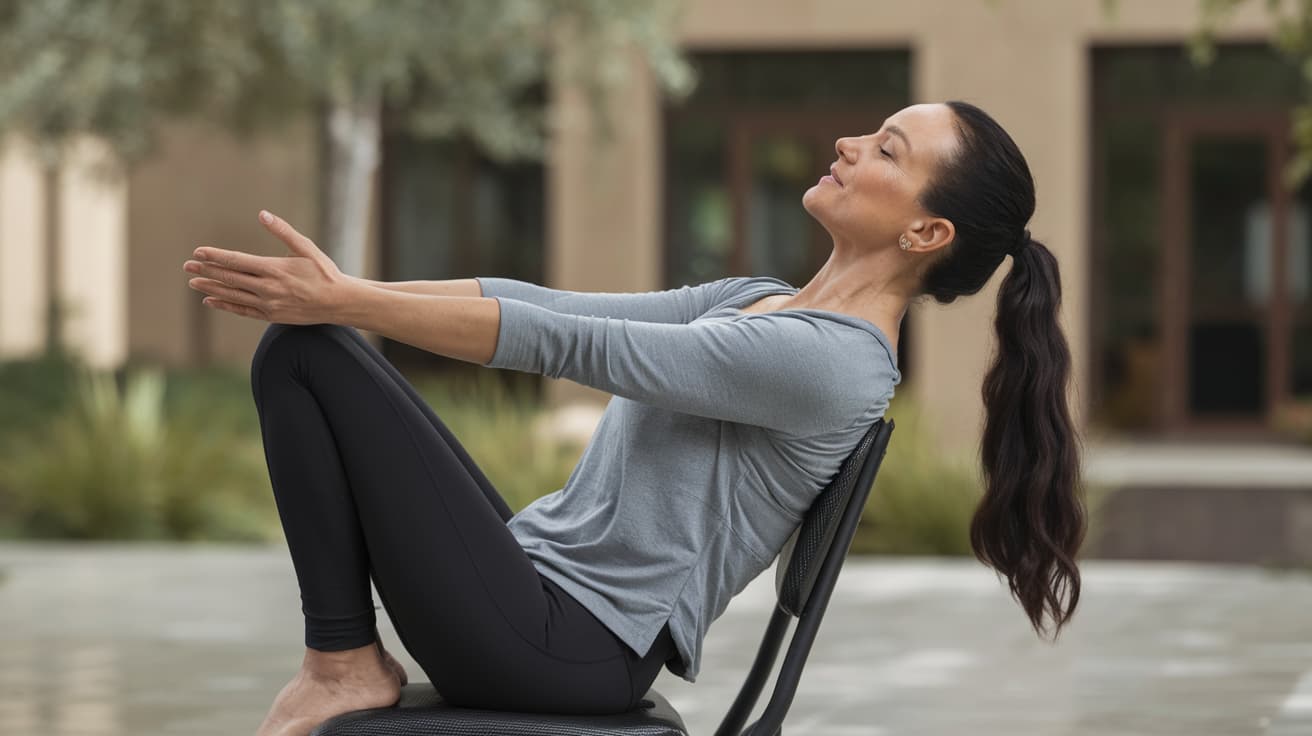
If you find yourself sitting for long periods, it's essential to incorporate some stretches that can easily be done from your chair. These simple movements not only enhance flexibility but also help ease tension that builds up throughout your workday. You might be surprised at how effective stretches like neck rolls and torso twists can be in promoting relaxation and circulation. Interested in learning which specific stretches can make a noticeable difference in your comfort and energy levels? Let's explore some practical options that fit seamlessly into your daily routine.
Key Takeaways
- Perform seated hip openers by crossing one ankle over the opposite knee to enhance hip flexibility and relieve tension.
- Incorporate seated side bends by raising one arm overhead and leaning to the opposite side to stretch the side body.
- Engage in torso twists while seated to improve spinal mobility and alleviate back and shoulder tension.
- Execute wrist and finger stretches by extending an arm, pulling back fingers, and interlacing hands to combat typing strain.
- Utilize shoulder rolls by lifting shoulders towards ears and rolling them back to reduce shoulder tension and promote relaxation.
Neck Stretch

When it comes to easing tension, a neck stretch can be a game changer. If you often find yourself staring at screens or hunched over your work, you might experience tightness or discomfort in your neck. That's where the benefits of neck stretches come in—they help relieve that tension, improve circulation, and enhance your overall flexibility.
One effective neck stretch technique you can try is the side tilt. Simply sit up straight in your chair and gently tilt your head to one side, bringing your ear toward your shoulder. Hold this position for about 15-30 seconds, then switch sides. This stretch not only eases tightness but also lengthens the muscles around your neck.
Another technique is the neck rotation. While seated, slowly turn your head to one side, looking over your shoulder, and hold for a few seconds. Return to the center and repeat on the other side.
These simple stretches can make a significant difference in how you feel throughout the day. By incorporating neck stretches into your routine, you can effectively combat discomfort and promote relaxation, making your work environment much more enjoyable.
Shoulder Rolls

As you sit at your desk, it's easy to forget about the tension building in your shoulders, but incorporating shoulder rolls into your routine can help alleviate that discomfort. These simple movements enhance shoulder mobility and promote muscle relaxation, making them an effective way to combat stress and improve your posture.
To perform shoulder rolls, sit up straight with your feet flat on the floor. Inhale deeply, lifting your shoulders toward your ears. As you exhale, roll them back and down in a circular motion. Repeat this for about 10 repetitions, then switch directions. This exercise not only provides tension relief but also enhances your range of motion and flexibility.
Adding shoulder rolls to your daily routine can lead to significant benefits, including injury prevention and stress reduction. By being mindful of your breath during the exercise, you'll also cultivate breath awareness, further enhancing relaxation.
Whether you're working from home or in an office, taking these moments for shoulder rolls can transform your workday, helping you feel more energized and focused. Give it a try, and notice the difference in how your shoulders feel!
Upper Back Stretch

A simple upper back stretch can work wonders for relieving tension and improving your posture, especially after long hours of sitting. If you find yourself hunching over your desk, it's essential to prioritize upper back health.
Start by sitting tall in your chair, ensuring your back is straight and your shoulders are relaxed.
Interlace your fingers and extend your arms in front of you. As you inhale, draw your shoulder blades back, and as you exhale, round your upper back, pushing your hands forward. This motion stretches the upper back muscles and counteracts the effects of poor chair ergonomics. Hold this position for 15-30 seconds, and remember to breathe deeply.
To deepen the stretch, you can also lean slightly to one side while keeping your arms extended. This adds a lateral component, targeting different areas of your upper back.
Incorporating this stretch into your daily routine can greatly enhance your upper back health, making you feel more relaxed and focused.
Chest Opener

After addressing the tension in your upper back, it's important to open up your chest to further improve your posture and promote better breathing. A simple chest opener stretch can bring numerous benefits, enhancing your awareness of body mechanics while encouraging relaxation.
To perform this stretch, sit comfortably in your chair with your feet flat on the ground. Clasp your hands behind your back, interlocking your fingers. As you inhale deeply, gently pull your shoulders back and lift your chest towards the ceiling. Hold this position for 15-30 seconds, focusing on your breathing techniques.
Feel the stretch across your chest and shoulders, which can help counteract the slumped posture many of us adopt during long hours of sitting.
As you engage in this stretch, be mindful of the benefits awareness it brings. You'll notice increased openness in your chest, making it easier to take deeper breaths. This simple act can also elevate your mood and energy levels throughout the day.
Incorporating the chest opener into your routine not only enhances physical well-being but also fosters a greater connection between body and mind.
Seated Side Bend

With your back straight and feet grounded, the seated side bend is a fantastic way to stretch your sides and enhance flexibility. This simple movement targets your side body, improving seated flexibility while promoting relaxation.
To perform the seated side bend, sit up tall in your chair with your arms at your sides. Inhale deeply, raising your right arm overhead. As you exhale, gently lean to the left, allowing your right arm to stretch over your head. You should feel a pleasant stretch along the right side of your body. Hold this position for a few breaths, focusing on deepening the stretch with each exhale.
Return to the starting position and repeat on the other side, raising your left arm overhead and leaning to the right. It's crucial to keep your hips grounded as you bend, ensuring you're not twisting your torso.
This stretch not only helps relieve tension but also increases mobility, making it an excellent addition to your daily routine. Incorporate the seated side bend whenever you need a quick refresh, whether at work or home. Your side body will thank you for it!
Seated Forward Fold

During your workday or anytime you need a moment of calm, the seated forward fold is an excellent stretch to release tension in your back and hamstrings.
To perform this stretch, sit up straight in your chair with your feet flat on the ground. Inhale deeply, then as you exhale, gently lean forward, reaching your arms toward your feet. You'll feel a delightful stretch in your lower back and thighs.
One of the seated benefits of this stretch is its ability to improve flexibility and circulation while also calming your mind. If you're looking for fold variations, try bending your elbows and letting your hands rest on your thighs or the floor for a deeper stretch. You might also experiment with wider leg positioning to target different areas of your hamstrings.
Remember to listen to your body throughout the movement. If you feel any discomfort, back off slightly to avoid injury.
Hold the position for 15 to 30 seconds, breathing deeply. Incorporating the seated forward fold into your routine can enhance your overall well-being, leaving you refreshed and ready to tackle your next task.
Wrist and Finger Stretch

Wrist and finger stretches are essential for counteracting the strain that comes from typing or using your phone for extended periods. You can easily perform these stretches right from your chair, helping improve finger mobility and wrist flexibility.
Start by extending one arm in front of you, palm facing up. With your other hand, gently pull back on your fingers, creating a stretch in your wrist and forearm. Hold for 15 to 30 seconds, then switch sides.
Next, interlace your fingers and stretch your arms out in front of you, rounding your back slightly. This helps with grip strength and hand coordination. For added muscle relaxation, shake out your hands and wrists to release any tension.
Incorporating these stretches into your routine promotes tendon health and enhances joint care. Regular practice can also provide stress relief, making it easier to focus on your tasks.
Remember to listen to your body and avoid overstretching. By taking just a few minutes for wrist and finger stretches, you'll feel more relaxed and prepared to tackle your day.
Seated Hip Opener

A seated hip opener is a fantastic way to release tension stored in your hips, especially if you spend long hours sitting. This stretch enhances hip flexibility and counters the stiffness that can build up from prolonged seated posture.
To begin, sit up tall in your chair with your feet flat on the ground, hip-width apart. Inhale deeply, and as you exhale, cross your right ankle over your left knee, creating a figure-four shape. Keep your back straight and gently press down on your right knee. You should feel a stretch in your right hip and glute. Hold this position for 15-30 seconds, breathing deeply.
Next, switch sides by uncrossing your legs and crossing your left ankle over your right knee. Again, maintain your seated posture and gently press down on your left knee. This will further enhance your hip flexibility and help release any tension.
Incorporating seated hip openers into your daily routine can greatly improve your overall comfort and mobility, making it easier to shift from sitting to standing.
Ankle Circles

Engaging in ankle circles is an excellent way to improve circulation and flexibility in your ankles, especially after sitting for extended periods. This simple exercise can enhance your ankle mobility and promote better foot alignment, which is essential for overall stability.
To perform ankle circles, sit comfortably in your chair with your feet flat on the ground. Lift one foot slightly off the floor and point your toes. Begin to rotate your ankle in a circular motion, making sure to engage the muscles around your ankle. Aim for ten circles in one direction, then switch to the opposite direction. Repeat this for the other ankle.
As you do this exercise, pay attention to how your ankle feels. You might notice increased range of motion and a soothing sensation as you work through any stiffness.
Ankle circles are particularly beneficial for those who spend long hours at a desk or have limited movement during the day.
Incorporating this stretch into your routine can help prevent discomfort and improve your overall foot health. So, take a moment to engage in ankle circles and give your feet the attention they deserve!
Torso Twist

The torso twist is a fantastic way to enhance spinal mobility and relieve tension in your back and shoulders while seated. By integrating this stretch into your routine, you can experience multiple benefits of torso twists, including improved flexibility and increased circulation.
To perform the torso twist, sit up straight in your chair, ensuring proper torso alignment. Place your right hand on the back of your chair for support and gently twist your torso to the right. Hold this position for a few seconds, feeling the stretch in your back and shoulders. To deepen the stretch, you can look over your right shoulder.
Then, return to the center and repeat on the left side. This simple movement not only helps to alleviate stiffness but also encourages relaxation and mental clarity.
Regularly practicing torso twists can greatly reduce discomfort from prolonged sitting, making it an essential stretch for office workers or anyone spending long hours in a chair. Remember to breathe deeply throughout the stretch, allowing your body to relax into the movement.
Incorporating torso twists into your daily routine can lead to a more comfortable and flexible you.
Full-Body Stretch

Stretching your entire body from a chair can greatly enhance your overall flexibility and promote better circulation. One effective way to achieve this is through a full-body stretch that incorporates dynamic stretches. These stretches keep your muscles engaged and help improve your range of motion.
To perform a full-body stretch, start by sitting up straight in your chair. Take a deep breath, raising your arms overhead. As you exhale, lean to one side, feeling the stretch along your side body. Hold for a few seconds, then switch sides.
Next, extend one leg out straight while keeping the other foot on the floor. Reach forward towards your toes, which can boost flexibility benefits in your hamstrings and lower back.
Now, bring your arms back overhead, and as you lean back slightly, feel the stretch in your chest and shoulders. Finish by gently twisting your torso to one side, then the other, which adds a dynamic element to your routine.
Integrating these stretches into your daily routine can help you stay limber and energized, making it easier to tackle your day with confidence.
Conclusion

Incorporating these chair stretches into your daily routine can transform how you feel throughout your workday. You'll find that even a few minutes of movement can boost your energy and improve your posture, making you feel like a million bucks. So, the next time you're stuck at your desk, remember these simple stretches. Your body will thank you, and you might even discover a new way to chill out while boosting your productivity.
Keep reading

20 Latest Crochet Neck Warmer Ideas To Try In 2025!
Link up with the 20 best crochet neck warmers that blend warmth and style—discover which designs will transform your winter wardrobe!

20 Amazing Crochet Jewelry Ideas
Amazing crochet jewelry ideas await you, featuring unique designs that will inspire your creativity and elevate your accessory game to new heights.

20 Amazing Crochet Kit Ideas
Navigate through 20 amazing crochet kit ideas that spark creativity and joy; discover the perfect project to ignite your crafting passion!
Need personal guidance?
Talk to an advisor
Our care experts are here to help you make the right choice — for free.