How to Relieve Leg Pain From Sitting Too Long
Did you know that sitting for more than six hours a day can increase your risk of leg pain and discomfort? If you find yourself stuck in a chair for extended periods, it's essential to explore effective methods to ease that nagging pain. From simple stretches to ergonomic solutions, there are several strategies you can implement to improve your comfort and overall well-being. So, what are the best approaches to tackle this issue and keep your legs feeling their best?
Key Takeaways
- Take regular breaks to stand, stretch, or walk every 30 to 60 minutes to enhance circulation and reduce stiffness.
- Incorporate dynamic and static stretching exercises to relieve tight muscles and improve flexibility during breaks.
- Use an ergonomic chair and footrest to promote proper posture and reduce pressure on your legs.
- Stay hydrated by drinking water regularly to support muscle function and prevent cramps.
- Consider professional help if pain persists, swells, or worsens during physical activity for appropriate evaluation and treatment.
Understanding Leg Pain

When you sit for extended periods, you might notice discomfort or pain in your legs, which can stem from various factors. Understanding the causes of leg pain is essential for effective relief.
One common cause is poor circulation, often resulting from prolonged inactivity. When blood flow is restricted, you may experience symptoms such as heaviness, tingling, or cramping.
Another factor could be muscle strain or fatigue, especially if you've been sitting in an awkward position.
Leg pain symptoms can also arise from nerve compression, which occurs when pressure is applied to the nerves in your legs or back. This often leads to shooting pain, numbness, or weakness.
Conditions like sciatica or deep vein thrombosis can further complicate matters, highlighting the significance of addressing leg pain promptly.
Recognizing these underlying issues can empower you to take action. By being aware of your body's signals, you can seek appropriate interventions and make informed decisions about your health.
Importance of Movement

Movement plays an essential role in maintaining leg health and alleviating pain associated with prolonged sitting. When you sit for long periods, circulation slows down, leading to stiffness and discomfort in your legs. By incorporating regular movement into your day, you can notably reduce these negative effects and promote overall well-being.
The benefits of movement extend far beyond just relief from pain. Engaging in simple movement routines can enhance blood flow, strengthen muscles, and improve flexibility. This not only helps alleviate current discomfort but also prevents future issues. You don't need to set out on an extensive workout; even short walks or standing stretches can make a difference.
Consider setting a timer to remind yourself to move every hour. These brief interruptions to your sitting time can rejuvenate your legs and keep your body energized.
Additionally, integrating movement into your daily routine—whether it's walking during phone calls or doing leg lifts while at your desk—can foster a healthier lifestyle.
Stretching Exercises

How can stretching exercises help relieve leg pain from prolonged sitting? Stretching is essential for alleviating tension and improving flexibility, especially after long periods of inactivity. Incorporating both dynamic stretches and static stretches into your routine can help rejuvenate your legs and enhance blood flow, reducing discomfort.
Dynamic stretches, such as leg swings or walking lunges, warm up your muscles and prepare them for movement. These exercises increase circulation, making them ideal before you start your day or after extended sitting.
On the other hand, static stretches, like hamstring or quadriceps stretches, help elongate tight muscles and promote relaxation post-activity.
To get the most benefit from your stretching routine, consider these key practices:
- Hold static stretches for at least 15-30 seconds to guarantee effectiveness.
- Incorporate stretching breaks every hour during your workday to prevent stiffness.
- Combine stretches with deep breathing to enhance relaxation and focus.
- Listen to your body and avoid pushing through pain to prevent injury.
Proper Ergonomics

Proper ergonomics is essential for preventing leg pain caused by prolonged sitting. When you set up your workspace, start by choosing an ergonomic chair that supports your lower back and promotes good posture. This chair should allow your feet to rest flat on the floor, with your knees at or slightly below hip level.
Next, consider the desk height. Your desk should be at a level where your elbows are bent at about 90 degrees when typing. This positioning helps reduce strain on your legs and back. If your desk is too high or too low, it can lead to discomfort and fatigue over time.
Additionally, make sure your monitor is at eye level to prevent strain on your neck and shoulders, allowing for a more relaxed sitting position.
Regularly check your posture throughout the day; your back should be straight, and your shoulders relaxed.
Using a Footrest

Even with an ergonomic chair and desk setup, your legs can still experience discomfort from prolonged sitting. One effective solution is using a footrest. This simple addition can provide significant footrest benefits, helping to alleviate pain and improve your overall comfort.
By making ergonomic adjustments, you can promote better posture and circulation, reducing the risk of leg pain.
Here are some key advantages of incorporating a footrest into your workspace:
- Improved Posture: A footrest helps keep your feet flat, encouraging a neutral spine position.
- Enhanced Circulation: Elevating your feet can reduce pressure on your legs, improving blood flow.
- Reduced Discomfort: It can alleviate tension in your lower back and thighs, making long periods of sitting more bearable.
- Increased Focus: With less discomfort, you'll find it easier to concentrate on your work tasks.
To maximize the effectiveness of your footrest, adjust its height and angle to suit your needs.
This small change can make a big difference in your comfort level, allowing you to work more effectively without the nagging pain of prolonged sitting.
Staying Hydrated

Staying hydrated is fundamental for maintaining overall health and can greatly impact your comfort during long periods of sitting. When you're seated for extended durations, your body can become stiff and fatigued, making it essential to guarantee proper hydration.
Drinking enough water helps maintain blood circulation, which is critical for reducing leg pain and discomfort. The hydration benefits extend beyond just quenching your thirst. Adequate water intake supports muscle function and reduces the risk of cramps, which can be exacerbated by prolonged sitting.
When you're well-hydrated, your body can efficiently remove toxins and maintain peak tissue health, preventing stiffness and discomfort in your legs. Make it a habit to keep a water bottle nearby and set reminders to drink throughout the day.
It's recommended to aim for at least eight 8-ounce glasses of water daily, but individual needs may vary based on activity levels and environmental conditions. By prioritizing hydration, you're taking an important step toward relieving leg pain associated with sitting.
Massage Techniques

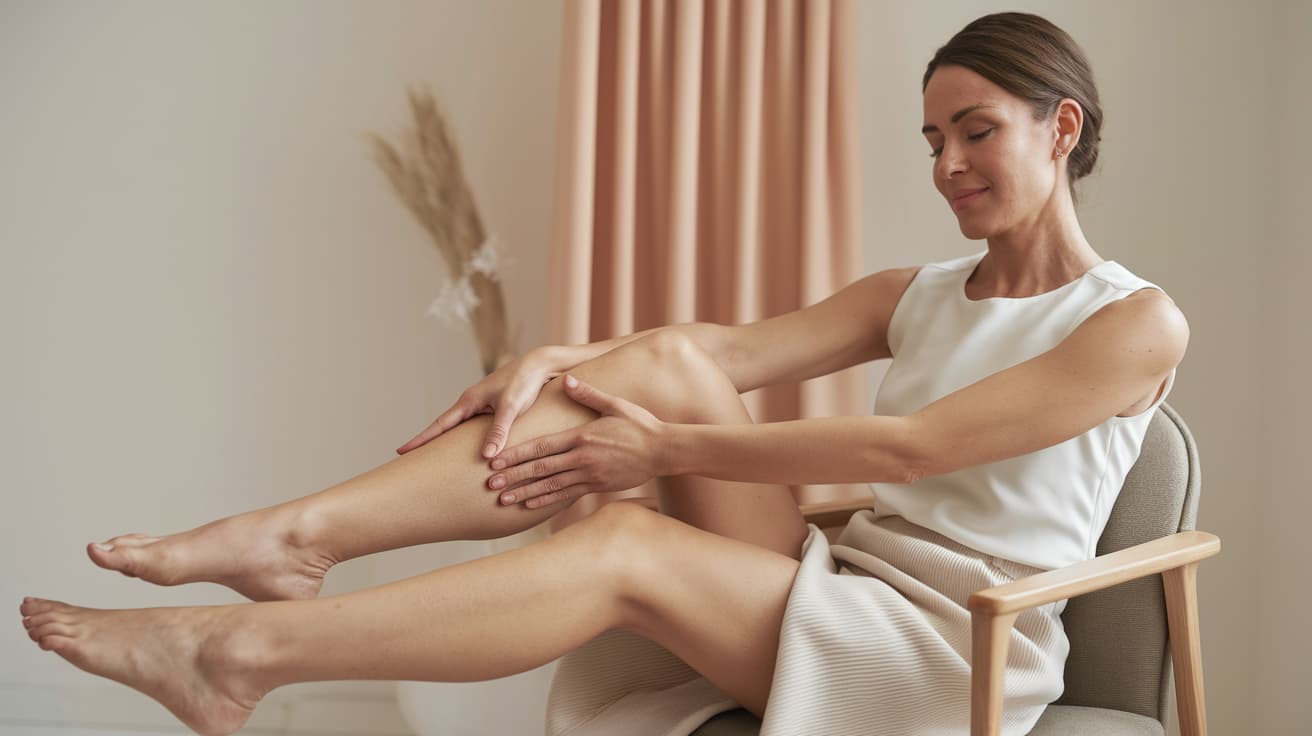
Keeping hydrated can set the stage for effective relief from leg pain, but incorporating massage techniques takes your comfort to the next level. You can use various self-massage techniques to ease tension and promote muscle recovery. By targeting acupressure points, you can stimulate circulation and alleviate discomfort.
Consider the following techniques:
- Foam Rolling Benefits: Rolling out tight muscles can release knots and improve flexibility, enhancing your overall mobility.
- Trigger Point Therapy: This method focuses on specific tender areas, helping to reduce pain and restore function in your legs.
- Massage Oils: Using essential oils like lavender or peppermint can enhance your experience, providing soothing effects while you massage.
- Relaxation Techniques: Combine deep breathing with your massage to promote a sense of calm and further relieve tension.
Regular Breaks

Taking regular breaks is essential for preventing and alleviating leg pain caused by prolonged sitting. When you sit for long periods, blood circulation slows down, leading to stiffness and discomfort in your legs. By incorporating short breaks into your routine, you give your body the opportunity to reset and recharge. Aim to stand up and move around every 30 to 60 minutes.
Consider using standing desks to encourage a more active posture while you work. This adjustment can help promote better circulation and reduce the strain on your legs. If standing desks aren't an option, simply walking around your workspace or performing light stretches can greatly improve blood flow.
Additionally, using circulation boosters, such as foot massagers or compression socks, can enhance circulation during your breaks. These tools can help relieve tension and improve overall comfort.
Seeking Professional Help

Recognizing when to seek professional help is essential for effectively addressing leg pain from sitting. If your discomfort persists despite trying home remedies or affects your daily activities, it's time to consult a professional.
Physical therapists can evaluate your condition and create a personalized treatment plan, while pain management specialists can offer targeted approaches to alleviate your symptoms.
Consider seeking professional help if you experience:
- Persistent pain that doesn't improve with rest or stretching
- Swelling, numbness, or tingling in your legs
- Pain that worsens during physical activity or at night
- Difficulty standing up or walking without pain
A healthcare provider can identify underlying issues contributing to your leg pain, ensuring you receive the right interventions.
They may recommend physical therapy to strengthen your muscles and improve flexibility, which can greatly reduce discomfort. Additionally, they can guide you through effective pain management strategies that suit your lifestyle.
Remember, your well-being matters, and taking that step to seek help can lead to lasting relief and improve your quality of life.
Don't hesitate—reach out and start your journey toward feeling better today.
Frequently Asked Questions
Can Leg Pain Indicate a More Serious Medical Condition?
Leg pain can indeed indicate more serious conditions. It might stem from poor blood circulation or nerve compression. If your pain persists, it's essential to consult a healthcare professional for proper evaluation and guidance.
What Are Common Causes of Leg Pain While Sitting?
Have you ever felt a nagging pain while sitting? Poor sitting posture can lead to circulation issues, causing discomfort in your legs. Staying aware of your position and movements can help prevent these frustrating sensations.
Are There Specific Ergonomic Chairs Recommended for Leg Pain Relief?
Yes, specific ergonomic chairs can greatly help. Look for chairs with adjustable seat height, lumbar support, and armrests. These ergonomic features promote better posture, which can alleviate leg pain when you're sitting for extended periods.
How Often Should I Take Breaks to Prevent Leg Pain?
To prevent leg pain, take breaks every 30 to 60 minutes. Incorporate stretching exercises and maintain proper posture during your sitting sessions. These habits can greatly reduce discomfort and enhance your overall well-being.
Is Heat or Cold Therapy Better for Leg Pain Relief?
When you're dealing with leg pain, heat therapy can relax muscles and improve circulation, while cold therapy reduces inflammation and numbs discomfort. Depending on your symptoms, alternating both methods might provide the best relief.
Conclusion

In summary, you can effectively relieve leg pain from prolonged sitting by embracing these strategies. Regular movement, proper ergonomics, stretching, and hydration play essential roles in preventing discomfort. Many people underestimate the impact of simple adjustments, but these small changes can make a significant difference in your well-being. If you continue to experience pain, don't hesitate to seek professional help—it's often the key to identifying underlying issues and ensuring long-term relief. Your comfort matters!
Keep reading

20 Latest Crochet Neck Warmer Ideas To Try In 2025!
Link up with the 20 best crochet neck warmers that blend warmth and style—discover which designs will transform your winter wardrobe!

20 Amazing Crochet Jewelry Ideas
Amazing crochet jewelry ideas await you, featuring unique designs that will inspire your creativity and elevate your accessory game to new heights.

20 Amazing Crochet Kit Ideas
Navigate through 20 amazing crochet kit ideas that spark creativity and joy; discover the perfect project to ignite your crafting passion!
Need personal guidance?
Talk to an advisor
Our care experts are here to help you make the right choice — for free.