How Many Squats a Day for Seniors - an Expert Guide

Did you know that incorporating squats into your daily routine can greatly enhance your strength and mobility as you age? It's not just about fitting in a workout; it's about improving your overall quality of life. But how many squats should you actually aim for each day? The answer isn't one-size-fits-all, as various factors can influence your ideal number. Understanding these nuances is essential for maximizing benefits while ensuring safety and effectiveness. Let's explore what you need to know to tailor a squat routine that suits your needs.
Key Takeaways
- Seniors should start with 5 to 10 squats daily, gradually increasing to 15 or 20 as strength improves.
- Aim for at least two to three sets of squats, prioritizing consistency over intensity.
- Proper squat technique includes maintaining shoulder-width stance and ensuring knees track over toes.
- Modifications like chair squats or wall support can help beginners and those needing extra balance.
- Consult with healthcare professionals to tailor squat routines to individual health and fitness levels.
Importance of Squats for Seniors
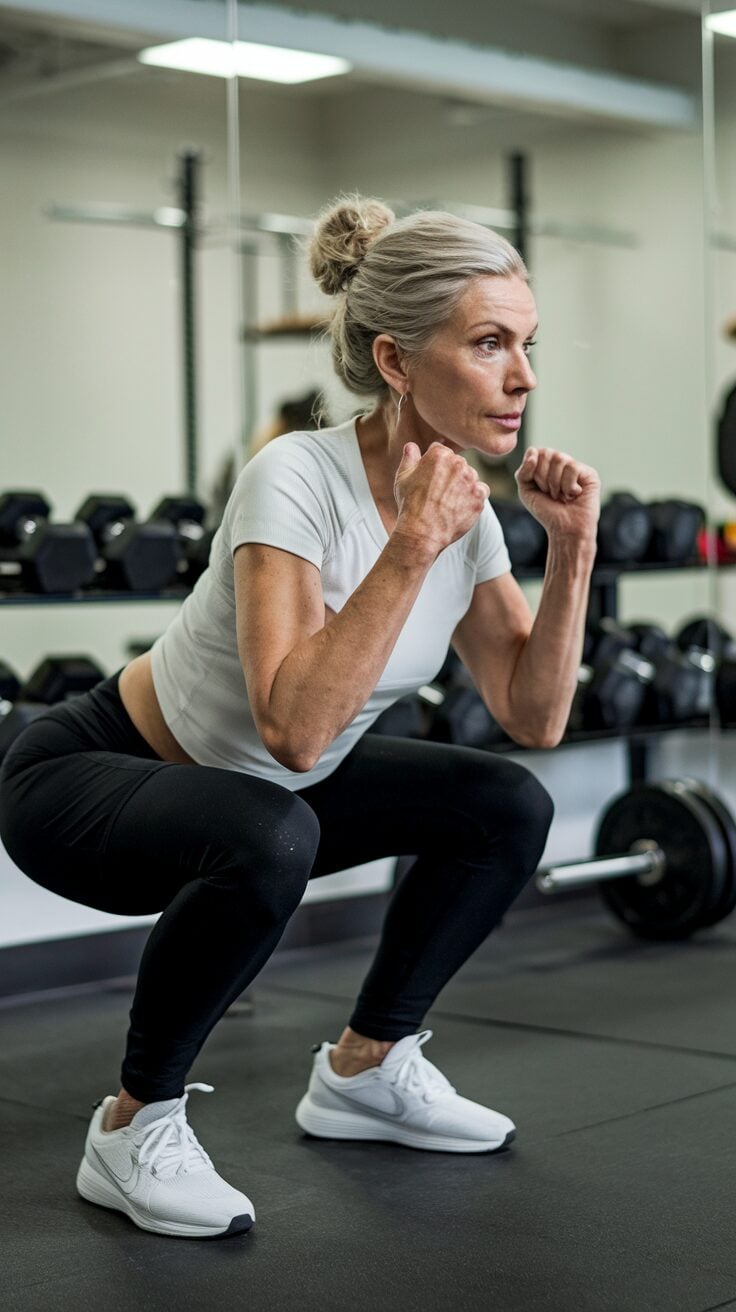
As you age, maintaining strength and mobility becomes increasingly important, and squats can play a significant role in this process. Squats are a fundamental exercise that targets multiple muscle groups, including your legs, core, and glutes. They help improve your balance and stability, which are crucial for preventing falls, a common concern for seniors.
Incorporating squat variations into your routine can enhance your strength training. You might start with bodyweight squats, then progress to variations like chair squats or wall squats, which offer additional support. These adaptations allow you to build strength safely and effectively, catering to your fitness level and comfort.
Moreover, squats not only strengthen your muscles but also promote better joint health. As you perform them regularly, you'll likely notice improvements in your ability to perform daily tasks, such as climbing stairs or getting in and out of a chair. Shop For Supplements For Women Over 50
Recommended Daily Squat Reps

Finding the right number of squat repetitions for your daily routine can greatly enhance your fitness journey as a senior. Generally, age-specific guidelines suggest that starting with 5 to 10 squats per session is a great way to begin. As you gain strength and confidence, you can gradually increase your daily squat goals to 15 or even 20 repetitions, spread throughout the day.
It's essential to listen to your body. If you feel pain or discomfort, it's okay to reduce the number of reps or take breaks as needed. Remember, consistency is more important than intensity. Aim for at least two to three sets of squats, ensuring you maintain proper form to prevent injury.
Additionally, consider incorporating variations like chair squats or wall sits to keep your routine fresh and engaging. These alternatives can help you meet your daily squat goals while targeting different muscle groups.
Always consult with a healthcare professional or a fitness expert tailored to seniors before starting any new exercise program. This way, you'll be equipped with a plan that truly works for you and your individual needs. Shop For Supplements For Women Over 50
Factors Affecting Squat Quantity

When determining how many squats you can comfortably do each day, several factors come into play. Age-related factors greatly affect your overall fitness levels and should be considered. As you age, muscle strength and joint flexibility can decrease, making it important to assess your current capacity before starting any exercise routine.
Health conditions, such as arthritis or heart issues, also play a key role in how many squats you can safely perform. If you have mobility issues, it's crucial to listen to your body and modify your exercise accordingly.
Your exercise history is another important aspect; if you've been active, you may handle more repetitions than someone just starting out.
Pain tolerance varies from person to person, so it's important to gauge how you feel during and after squats. Begin with a few reps and gradually increase them as your strength and flexibility improve.
Ultimately, the right number of squats for you balances these factors, ensuring that you promote your health without risking injury. Always consult a healthcare professional or fitness expert to tailor a plan that suits your unique needs. Shop For Supplements For Women Over 50
Proper Squat Technique
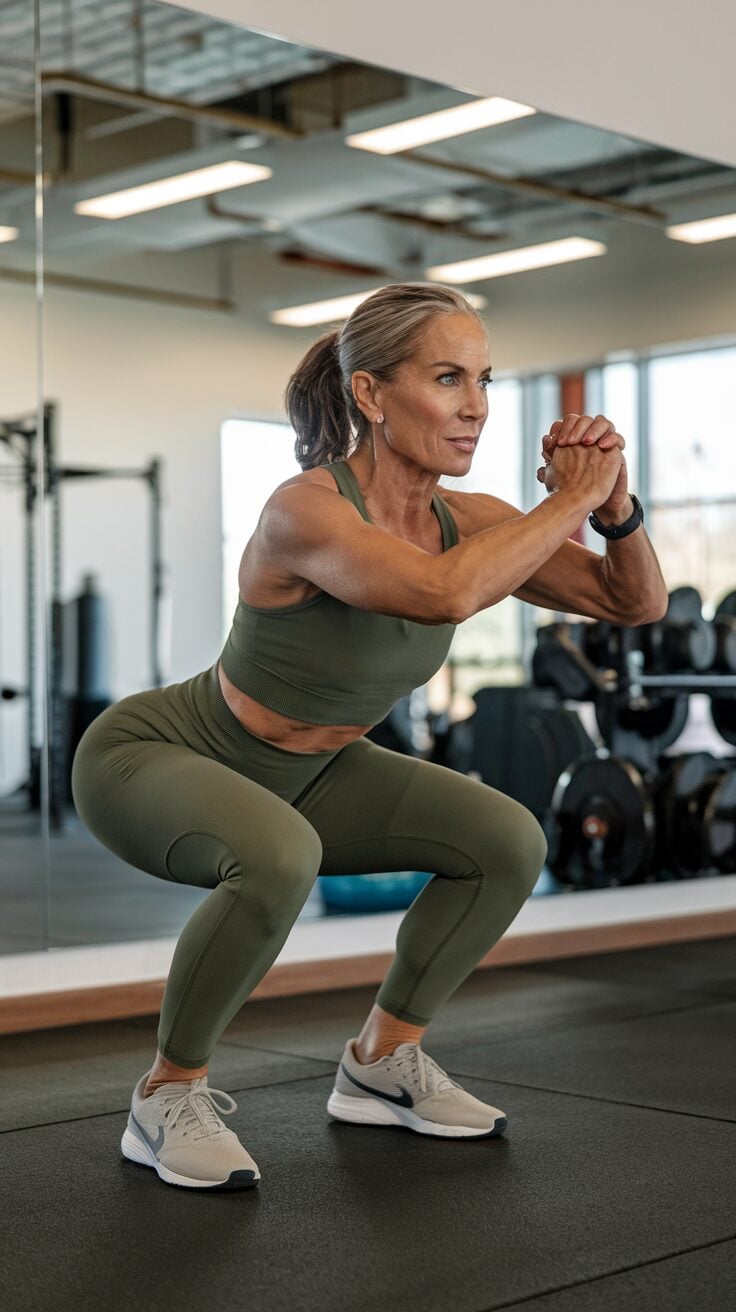
Mastering proper squat technique is essential for maximizing benefits and minimizing injury risk, especially for seniors. A well-executed squat not only strengthens your legs but also improves balance and stability.
Here are four key points to keep in mind:
- Feet Position: Stand with your feet shoulder-width apart and your toes slightly turned out. This position helps maintain good body alignment throughout the movement.
- Squat Depth: Aim for a squat depth where your thighs are parallel to the ground or as low as you can comfortably go without compromising form. Going too low can strain your knees, so listen to your body.
- Knees Over Toes: Confirm your knees track over your toes as you squat. Avoid letting them cave in, as this can lead to injury.
- Chest Up, Back Straight: Keep your chest up and your back straight. This posture helps prevent excessive forward lean and keeps your body aligned correctly.
Modifications for Different Levels
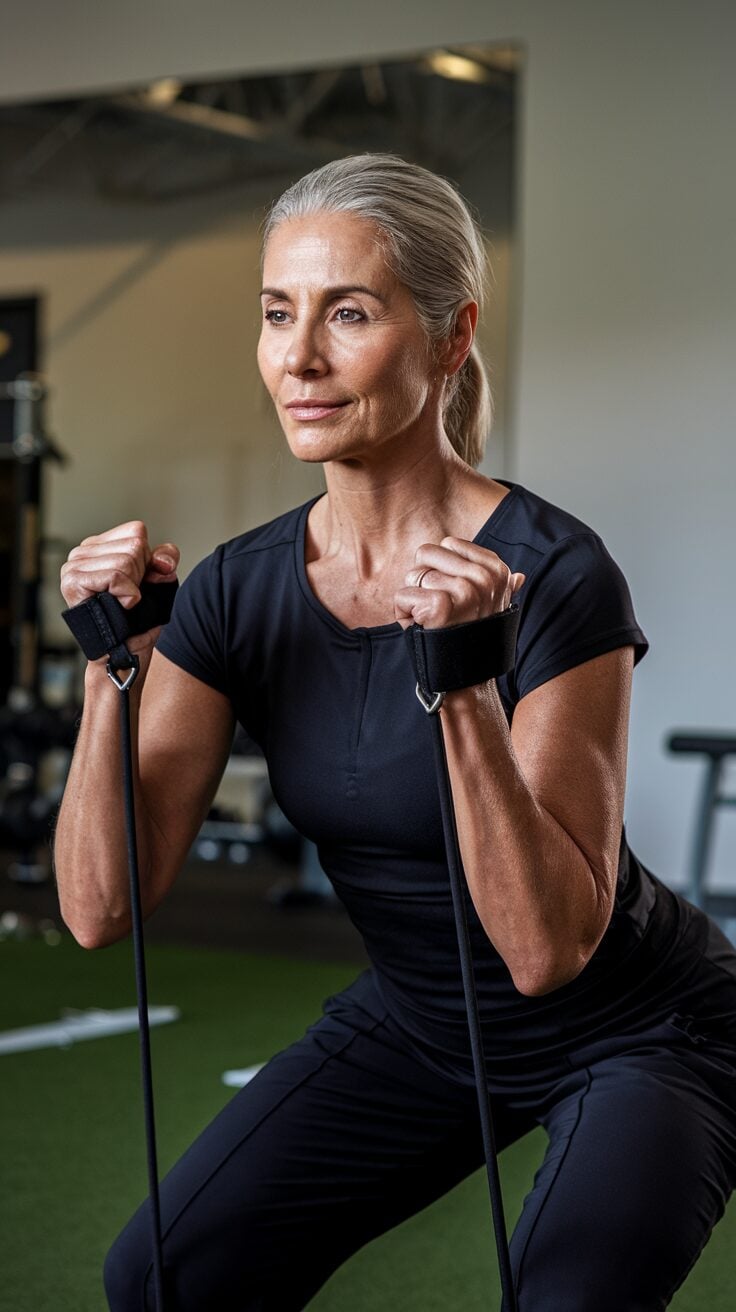
Modifications can make a significant difference in how seniors approach squats, ensuring that everyone can participate safely and effectively, regardless of fitness level.
If you're new to squats or find them challenging, chair squats are an excellent starting point. Simply sit back into a chair, ensuring you maintain good form, and rise back up. For added support, consider using wall support to help with balance as you squat.
If you're looking to enhance your strength, resistance bands can be incorporated to increase the challenge without risking injury. Stability balls are another great tool; try squatting while holding one against a wall for added stability. Assisted squats can also provide extra support, especially if you're still building your confidence. Shop For Supplements For Women Over 50
Benefits of Squats for Seniors

Squats are a powerhouse exercise that can greatly enhance your overall health and well-being as a senior. By incorporating squats into your routine, you'll experience various benefits that can improve your quality of life.
Here are four significant advantages:
- Increased Muscle Strength: Regularly doing squats targets your lower body muscles, helping to build strength in your legs and core. This is essential for maintaining balance and stability, which can prevent falls.
- Enhanced Joint Flexibility: Squats promote better range of motion in your hips, knees, and ankles. Improved flexibility can ease stiffness and reduce the risk of injury during daily activities.
- Boosted Bone Density: Weight-bearing exercises like squats help strengthen bones, reducing the risk of osteoporosis. This is especially important as we age.
- Improved Functional Mobility: Squats mimic everyday movements such as sitting and standing. Strengthening these muscles can make daily tasks easier and more manageable.
Common Mistakes to Avoid
When starting an exercise routine, it's easy to overlook some common pitfalls that can hinder your progress or even lead to injury. One major mistake is neglecting balance exercises. As you age, your balance can diminish, making it essential to incorporate exercises that enhance stability before diving into squats. Without a solid foundation, you might find yourself at risk of falls.
Another common error is ignoring joint flexibility. Squats require a good range of motion in your hips, knees, and ankles. If you're not flexible enough, you may end up compensating with improper form, which can lead to strain or injury. Take time to warm up and include stretches that target these areas.
Also, don't rush into doing too many squats at once. Start with a manageable number and gradually increase as your strength and endurance improve. Listen to your body—if you feel pain, stop and reassess your technique. Shop For Supplements For Women Over 50
Incorporating Squats Into Routine
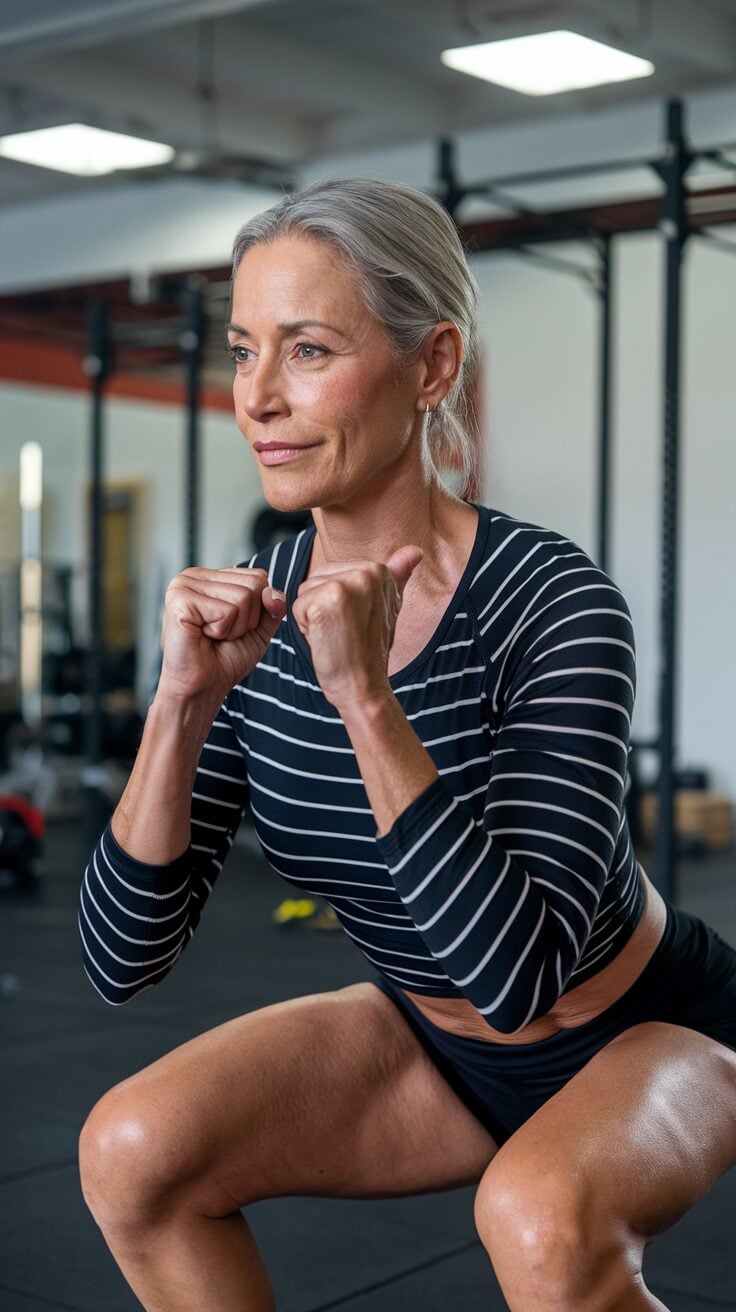
Building a solid foundation in balance and flexibility sets the stage for successfully incorporating squats into your exercise routine.
It's important to start gradually and choose squat variations that align with your fitness goals. Here are some steps to help you get started:
- Warm Up: Begin with gentle stretches and movements to prepare your muscles and joints. This reduces the risk of injury and improves your performance.
- Choose the Right Variation: Consider options like chair squats, wall squats, or even using resistance bands. Each variation can target different muscle groups, so pick what feels comfortable.
- Set Realistic Goals: Aim for a specific number of squats each day, gradually increasing as you become stronger. This keeps you motivated and helps track your progress.
- Incorporate into Daily Life: Try adding squats to your daily routine. You can do them while watching TV or during breaks from other activities.
Monitoring Progress and Safety
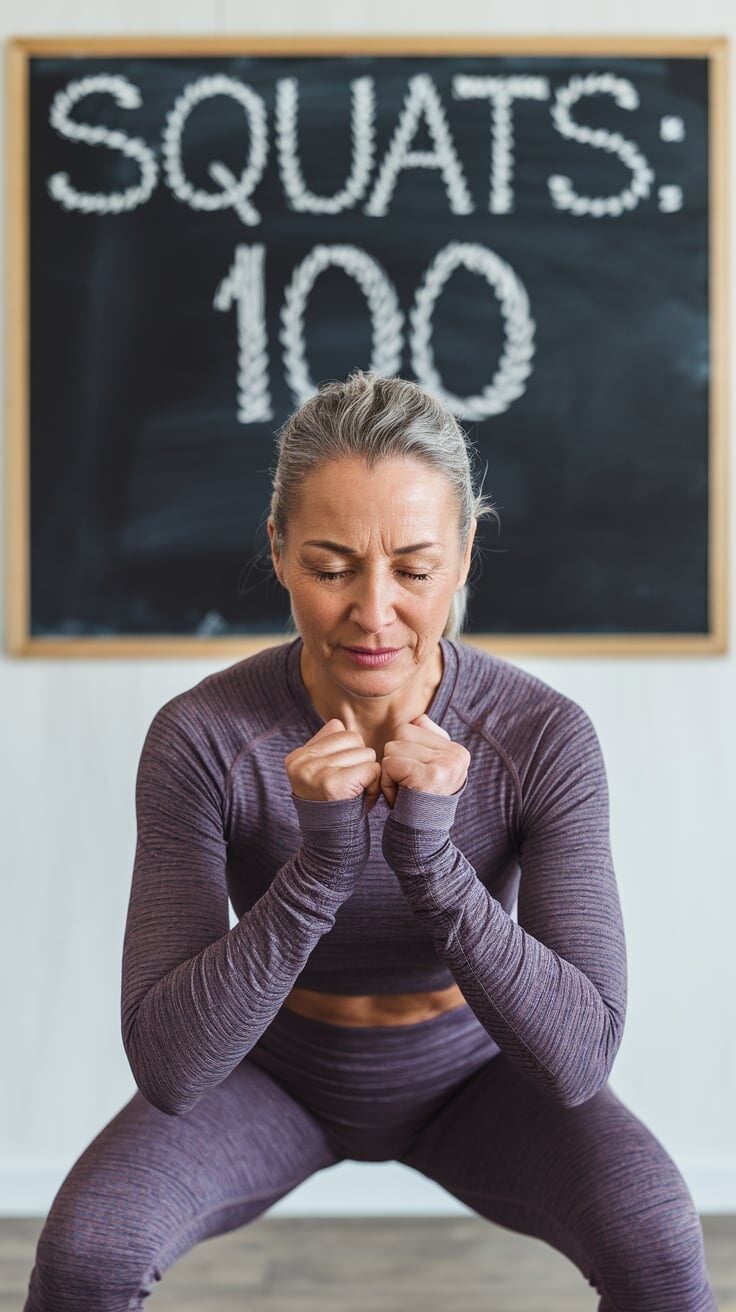
Tracking your progress and ensuring safety during squats is essential for seniors looking to enhance their strength and stability. By monitoring your performance, you can identify improvements and adjust your routine as needed. Start by keeping a simple log of your squat repetitions, sets, and any discomfort you may experience. This will help you recognize patterns and celebrate milestones.
Safety measures are equally important. Before starting, make sure you're using proper form. Your feet should be shoulder-width apart, and you should keep your back straight. Consider using a sturdy chair for support if you're unsure about balance.
It's wise to consult a healthcare professional before beginning any new exercise regimen, especially if you have pre-existing conditions.
Listen to your body. If you experience pain or excessive fatigue, take a break or reduce your squat volume. It's also beneficial to incorporate rest days into your routine to allow your muscles to recover. Shop For Supplements For Women Over 50
Frequently Asked Questions
Can Squats Help With Arthritis Pain in Seniors?
Yes, squats can help with arthritis pain in seniors. By incorporating squat variations, you improve joint mobility, strengthen muscles, and reduce stiffness. Always consult a healthcare professional for personalized advice before starting any exercise program.
What Equipment Is Needed for Squats?
For squats, you don't need much equipment. A sturdy chair can aid stability, while resistance bands can enhance squat variations. Remember to focus on proper form to maximize benefits and minimize injury risks.
Are There Age Restrictions for Doing Squats?
Imagine a sturdy oak, standing strong yet flexible. There aren't strict age restrictions for squats; however, consider squat modifications for comfort. Prioritizing senior safety guarantees you strengthen your roots without risking injury.
How Can I Tell if I'm Overdoing Squats?
If you're overdoing squats, listen to your body. Watch for pain signals and guarantee your squat technique is correct. If you feel discomfort or fatigue, it's time to rest and adjust your routine.
Can Squats Improve Balance and Stability in Seniors?
Research shows that 30% of seniors fall each year. By incorporating squats into your routine, you'll enhance balance benefits and stability exercises, reducing fall risk and promoting overall strength and confidence in your movements.
Conclusion
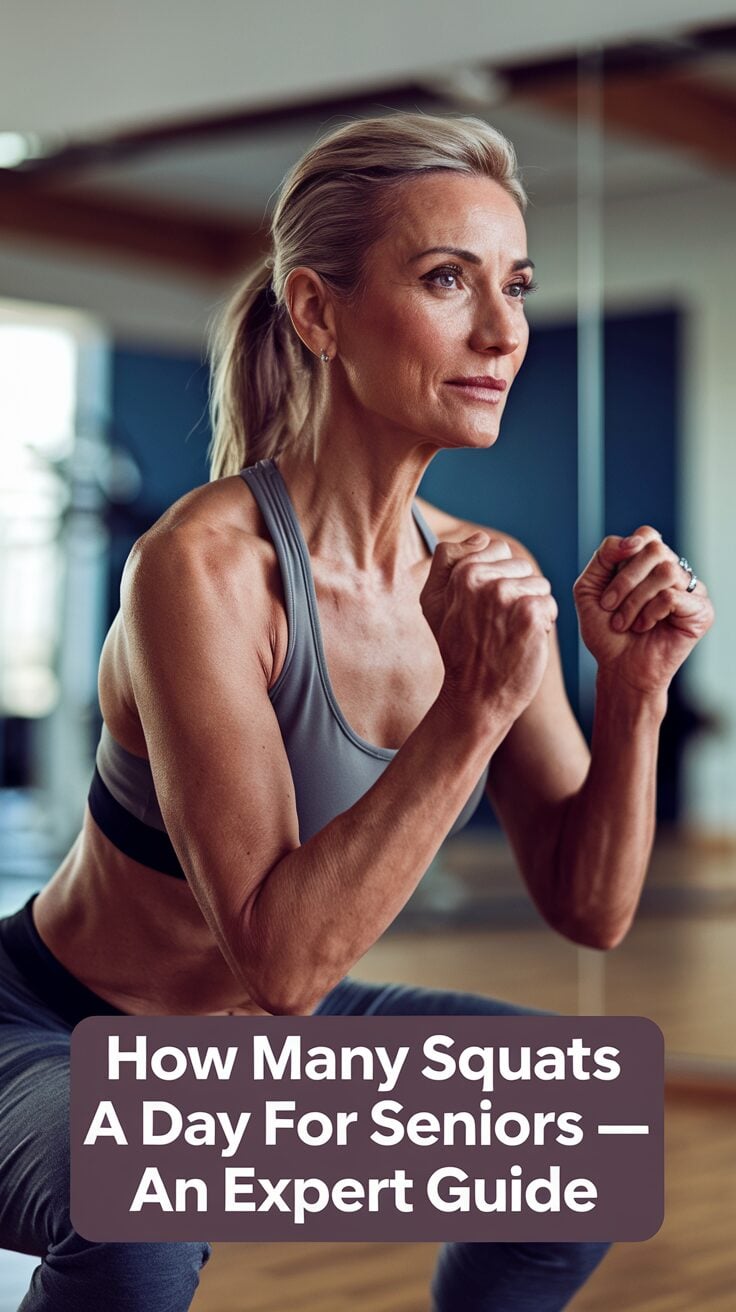
Incorporating squats into your daily routine can feel like planting seeds for a stronger, more balanced tomorrow. As you gradually increase your reps, imagine each squat lifting you closer to independence and confidence in daily tasks. By focusing on proper technique and making adjustments as needed, you're not just building strength; you're creating a safety net against falls. Remember, every small step counts, and with consistency, you'll flourish in both body and spirit. Keep moving forward!
Keep reading

20 Latest Crochet Neck Warmer Ideas To Try In 2025!
Link up with the 20 best crochet neck warmers that blend warmth and style—discover which designs will transform your winter wardrobe!

20 Amazing Crochet Jewelry Ideas
Amazing crochet jewelry ideas await you, featuring unique designs that will inspire your creativity and elevate your accessory game to new heights.

20 Amazing Crochet Kit Ideas
Navigate through 20 amazing crochet kit ideas that spark creativity and joy; discover the perfect project to ignite your crafting passion!
Need personal guidance?
Talk to an advisor
Our care experts are here to help you make the right choice — for free.