15 Best Dice Bag Sewing Ideas You Need To Try!
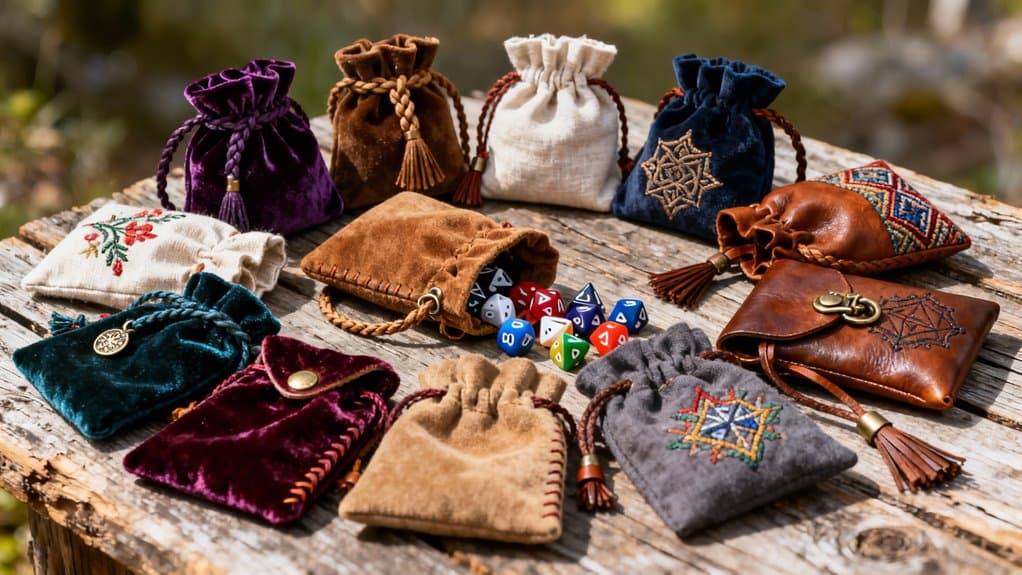
I’ve been sewing dice bags for my gaming group for years now, and I can tell you there’s something deeply satisfying about crafting a storage solution that’s both beautiful and functional. What started as a simple drawstring pouch has evolved into experimenting with segmented pockets, reversible linings, and even padded compartments. Whether you’re protecting precious metal dice or organizing sets for multiple campaigns, I’ve gathered the techniques that’ll transform your approach to dice storage.
Key Takeaways
- Create bags with box-bottom gussets and reinforced corners using fusible fleece for stable, durable construction holding 150 dice.
- Combine heavyweight canvas or crushed velvet with microfiber lining to protect metal dice while adding luxurious style.
- Personalize with embroidered character names in metallic thread, vinyl panels, or campaign-specific imagery like guild emblems.
- Install snap closures and wide drawstrings with toggle locks for quick access during intense gaming sessions.
- Add modular compartments with internal pockets to separate daily dice sets from specialty collections and prevent mix-ups.
Classic Six-Pocket Segmented Dice Bag

I’ll never forget the first time I dumped my entire dice collection onto a friend’s gaming table—twenty sets clattered together in a chaotic rainbow pile, and I spent the next ten minutes fishing out my favorite purple d20 from the heap.
That’s when I discovered the six-pocket segmented dice bag. I started with two 19-inch circles for the exterior and interior, plus two 15-inch circles for the pockets. The magic happens when you stitch a 2.5-inch hexagon at the center, then sew six radiating lines outward. Each pocket holds a complete dice set, keeping my translucent blues separate from my metal golds. I added grommets (no larger than ½-inch) around the edge for a drawstring closure. For extra stability, I stitched the pockets together at six points where they meet, which keeps the dividers from shifting during transport. Using interfacing can enhance the bag’s durability, ensuring that my dice stay organized, and I’ve saved countless minutes during game nights.
Double-Drawstring Round Bottom Dice Bag

The six-pocket design works beautifully for organization, but sometimes I need a bag that holds more dice and opens wider when I’m frantically searching for that one d10 mid-campaign. That’s when I turn to the double-drawstring round bottom dice bag.
I cut two circles for the base and four rectangles (two outer, two lining). After sewing each pair into tubes, I pin the circles to the bottom using quarter-point markers—north, south, east, west—which prevents puckering. The game-changer is creating two separate drawstring channels near the top by stitching parallel rows. Threading paracord in opposite directions means I can yank both strings simultaneously for a secure cinch. This sewing technique enhances the bag’s functionality and aesthetic appeal.
The round bottom maximizes interior space, easily holding six complete dice sets. Plus, that lined construction has saved me from sharp metal d4s puncturing through countless times. The drawstring closure allows me to grab my dice quickly during game sessions while keeping everything secure between uses.
Reversible Lined Dice Bag With Contrast Fabric

Versatility ranks high on my list when choosing which dice bag to sew next, and nothing beats a reversible design with contrast fabric. I pair cotton with satin or silk—one for the main, one for lining—using about 1/4 yard of each. The construction’s straightforward: I sew both fabrics into separate tubes, attach circular bases, then nest them right-sides together before turning through a gap in the lining. What I love most is the instant transformation when flipped inside-out. I’ve created fantasy-themed exteriors that reverse to subtle florals for non-gaming events. Two parallel topstitched channels secure the drawstrings, and the lined structure protects my dice beautifully. This project takes me roughly 90 minutes and requires only basic sewing skills—perfect for beginners wanting impressive results. The reversible design makes the bag ideal for storing small game bits and accessories beyond just dice. Additionally, the use of variety of pouch styles can truly enhance your sewing experience and inspire creative designs.
Mini Single-Set Travel Dice Pouch

Carrying seven dice doesn’t require a full-sized bag, which is why I started sewing mini single-set travel pouches for quick gaming sessions. I cut rectangles from cotton twill or burlap blends at 4.5″x5″, creating a compact pouch that slips into my pocket during convention games. The construction is straightforward: I sew flat seams along three sides, fold the top edge for a drawstring channel, and thread paracord through—it won’t fray like cotton twine. For added protection, I occasionally line mine with fleece scraps. Using fleece scraps can also enhance the durability and feel of your pouch. Boxed corners give the pouch structure without bulk. I’ve personalized several with dragon prints and Celtic knot fabrics, making them perfect gifts for my gaming group. Double-stitching the seams guarantees they survive years of frequent packing. To prevent fraying on fabric edges, I treat the raw seams with clear nail polish before turning the pouch right side out.
Eight-Pocket Polyhedral Organizer Bag

Organization transformed my gaming experience once I discovered the eight-pocket polyhedral organizer bag. I sewed my first one using sturdy canvas exterior with soft cotton lining, creating eight separate compartments around a central cavity. Each pocket perfectly holds a standard 7-dice RPG set, while the middle stores my oversized metal dice and miniatures. Creative backpack projects can inspire similar organizational designs.
I started by cutting an octagonal base, then basted pockets to the interior lining before attaching the outer shell. Triple-stitched seams proved essential—mine survived two years of weekly game nights. The padded construction keeps everything upright on the table, and my drawstring closure prevents spills during transport. I added metal skull toggles to my drawstrings for both functional grip and aesthetic appeal.
My medium-sized design measures 15×15 cm and stores twelve complete sets. It’s incredibly satisfying pulling out exactly the dice I need without digging through chaos.
Flat-Bottom Upright Dice Bag

Stability revolutionized my dice storage when I switched from floppy pouches to flat-bottom upright bags. I construct mine by sewing a 4.5″ circular base to a fabric tube, creating a sturdy foundation that stands independently during game nights. Using clear step-by-step instructions makes it easy to follow along and achieve great results.
My standard dimensions are 4.5″ diameter by 7″ height, comfortably holding 150 dice. I always reinforce with fusible interfacing—it prevents sagging when empty. The construction process involves backstitching stress points around the base attachment and leaving gaps for drawstring channels before final assembly.
I prefer canvas or velvet exteriors with quilting cotton linings for durability. The upright design keeps dice accessible without tipping, and I’ve repurposed extras for storing jewelry and small electronics. For fabric requirements, I typically use 1/4 yard for both the exterior and lining materials. Custom embroidery transforms these functional bags into personalized gaming accessories my friends constantly request.
Oversized 100+ Dice Storage Bag

My collection outgrew standard bags around the 80-dice mark, forcing me to design an oversized storage solution that wouldn’t collapse under weight. I settled on a 7.5″ cube pattern using heavy-duty canvas with reinforced double-stitching at every seam. The key breakthrough was adding a foam core base—it keeps the bag upright and prevents sagging when I’m digging for specific sets. Additionally, this design is perfect for cozy oversized fits, which are great for storing larger quantities without sacrificing style.
I lined the interior with microfiber to protect my metal dice from scratching each other. Three internal pockets separate my daily sets from specialty dice, and I installed a wide drawstring with toggle locks instead of a standard closure. The contrast-colored pouches let me grab what I need instantly during game nights. This bag comfortably holds 150 dice and has survived countless transport sessions without strain. For comparison, standard dice bags typically measure around 3.5 x 5 inches and hold just one complete seven-dice set.
Embroidered Fantasy-Themed Dice Bag

After years of using plain fabric pouches, I finally designed an embroidered fantasy-themed dice bag that turns heads at every game session. I chose a four-panel construction using heavyweight canvas, applying my dragon motif to each panel before assembly to avoid tension issues. The key is using quality stabilizers during embroidery—I learned this the hard way when my first attempt puckered.
I personalized mine with my character’s name in elven script using metallic thread, creating that magical shimmer. The drawstring closure features braided leather cord with toggle ends for secure storage. Inside, I added a fabric lining to protect the embroidery stitches from dice wear.
My bag comfortably holds three standard dice sets, and the reinforced bottom prevents sagging. For those who prefer crochet over sewing, dice bags with pockets for added storage offer a practical alternative that’s equally popular among crafters. It’s become my campaign signature piece.
Velvet Luxury Dice Bag With Beaded Drawstring

The moment I ran my fingers across crushed velvet in that fabric store, I knew I’d found the perfect material for my most ambitious dice bag yet. I selected emerald velvet with satin lining, cutting circular bases for both layers with ½-inch seam allowances. After clipping curves carefully, I stitched the exterior and lining separately, then joined them at the top seam.
For the drawstring channels, I sewed three parallel lines—one at ⅛ inch from the top, another at ¾ inch, and a final at 1.5 inches. Using interfacing can help reinforce the structure of your bag, ensuring it holds its shape during use. I braided my drawstring using kumihimo technique with metallic floss, threading carved bone beads onto the ends. To add a mystical touch, I incorporated glow-in-the-dark skull beads at strategic points along the braid. I sealed each drawstring tip with a lighter to prevent fraying, creating a luxurious bag that’s become my go-to for special gaming sessions.
Box-Bottom Dice Bag With Gusset Design

When I noticed my favorite dice bag flopping over during game night for the third time that session, I decided it was time to learn the box-bottom gusset technique.
The transformation was incredible. By sewing the corners and trimming excess fabric, I created a flat base that stands upright reliably. I measured a fabric strip from corner to corner for the gusset, using 3/8-inch seam allowances throughout for structural integrity.
My chrome-tanned leather version holds 75 polyhedral dice comfortably—perfect for my collection of seven sets. I reinforced the corners with saddle stitching to handle the weight, then added metal eyelets around the drawstring opening.
The result? No more chasing rolling dice across the table. The box-bottom design provides stable access during play while looking professional.
Snap Closure Quick-Access Dice Bag

Fumbling with drawstring knots during intense gaming moments drove me to discover snap closure dice bags last year. I found metal spring snap frames at my local craft store—4″ to 6″ sizes work perfectly for standard polyhedral dice sets.
The construction’s straightforward: I cut matching rectangles from quilting cotton and lining fabric, sew the outer shell, then create casings at the top edge for the snap frame. The metal mechanism slides right in, creating an opening I can pop with one hand. When snapped shut, my dice stay secure even when my bag tips over in my backpack.
I’ve reinforced mine with interfacing for durability, and the metal frame outlasts any drawstring I’ve used. For a beginner-friendly alternative, the Pandora Dice Pouch pattern uses a magnetic snap closure instead of frames, achieving approximately 5 inches wide by 4 inches tall. Add embroidery or handles for personalization—mine features my character’s insignia.
Modular Multi-Compartment Gaming Bag

After juggling multiple dice sets in separate pouches for months, I finally designed a modular multi-compartment bag that keeps everything organized in one place. I created eight pie-slice dividers radiating from a center pocket, using quilting cotton with fusible fleece for structure. Each compartment holds a full polyhedral set without dice scratching each other.
Here’s my construction method: cut fabric panels for dividers, fuse interfacing for stability, then edge-stitch each section before assembling them in a circular pattern. I installed grommets around the top edge and threaded a drawstring closure. The flat base keeps it upright during game sessions.
You can customize compartment sizes by adjusting your template measurements. I’ve scaled mine to accommodate miniatures in wider sections, and the modular design lets me remove dividers when transporting larger accessories.
Padded Dice Bag With Fusible Fleece

I’ve sewn dozens of dice bags over the years, but adding fusible fleece transformed them from flimsy pouches into protective carriers that actually maintain their shape.
I cut my fusible fleece to match the fabric dimensions minus seam allowances, then fuse it to the wrong side of my outer fabric using a hot iron with a damp pressing cloth, holding for 15 seconds per section. After letting everything cool completely, I trim the fleece from seam allowances to reduce bulk.
The difference is remarkable—my bags now stand upright, resist crushing in my backpack, and dampen dice clatter. I particularly love using medium-weight cotton canvas with fleece; it balances durability and flexibility perfectly. I first fuse regular interfacing to the wrong side of the fabric to prevent wavy, bloated results, especially since the extra thickness improves firmness and durability. For extra rigidity, I’ll fuse fleece to both outer and lining layers.
Personalized Dice Bag With Name Tag Panel

While protective padding keeps dice safe inside, I’ve found that marking the outside of my bags prevents an equally frustrating problem—grabbing someone else’s dice at game night.
I create personalized name panels using permanent vinyl cut with my Cricut machine. I position the tag 2-2.5 inches from the bag’s top edge for clear visibility. For attachment, I prefer sewing with a zigzag stitch around the vinyl edges, though Velcro backing works beautifully for swappable designs between campaigns.
My favorite approach layers colored vinyl for two-tone effects—my current bag features my character’s name with a dragon silhouette behind it. I’ve experimented with 3D printed acrylic panels too, which withstand convention travel without scratching. The key is choosing waterproof materials that maintain legibility through countless game sessions.
Themed Appliqué Campaign Dice Bag

Last year, my druid’s campaign dice bag featured a hand-stitched oak tree appliqué with layered green felt leaves, and fellow players recognized my character before I even sat down at the table. I’ve found that selecting campaign-specific imagery—guild emblems, magical items, or iconic monsters—dramatically increases immersion. I always attach appliqué pieces before assembling the bag, working on flat rectangular panels. Fusible web keeps intricate cuts from shifting while I backstitch edges. For my wizard’s bag, I layered purple and gold felt to create a dimensional spellbook design, then added embroidered runes. I recommend cylindrical drawstring patterns with accessible front panels, avoiding seams that disrupt designs. Choose colorfast fabrics and secure all edges firmly. Hand-cleaning preserves detailed work better than machine washing. For friend gifts, I’ve incorporated webcomic characters for artist recipients who appreciate seeing their favorite illustrations on functional gaming accessories.
Conclusion
I’ll never forget the pride I felt gifting my first handmade dice bag to my dungeon master—watching their eyes light up made every stitch worthwhile. Now I’ve got a whole collection tucked away in my craft room! Whether you’re choosing crushed velvet for luxury or sturdy canvas for durability, these projects let you express your creativity while keeping your gaming essentials organized. Grab your fabric scraps and let’s start sewing—your perfect dice bag awaits!

Keep reading

20 Latest Crochet Neck Warmer Ideas To Try In 2025!
Link up with the 20 best crochet neck warmers that blend warmth and style—discover which designs will transform your winter wardrobe!
20 Amazing Crochet Jewelry Ideas
Amazing crochet jewelry ideas await you, featuring unique designs that will inspire your creativity and elevate your accessory game to new heights.
20 Amazing Crochet Kit Ideas
Navigate through 20 amazing crochet kit ideas that spark creativity and joy; discover the perfect project to ignite your crafting passion!
Need personal guidance?
Talk to an advisor
Our care experts are here to help you make the right choice — for free.