15 Best Cropped Jacket Sewing Ideas You Need To Try!
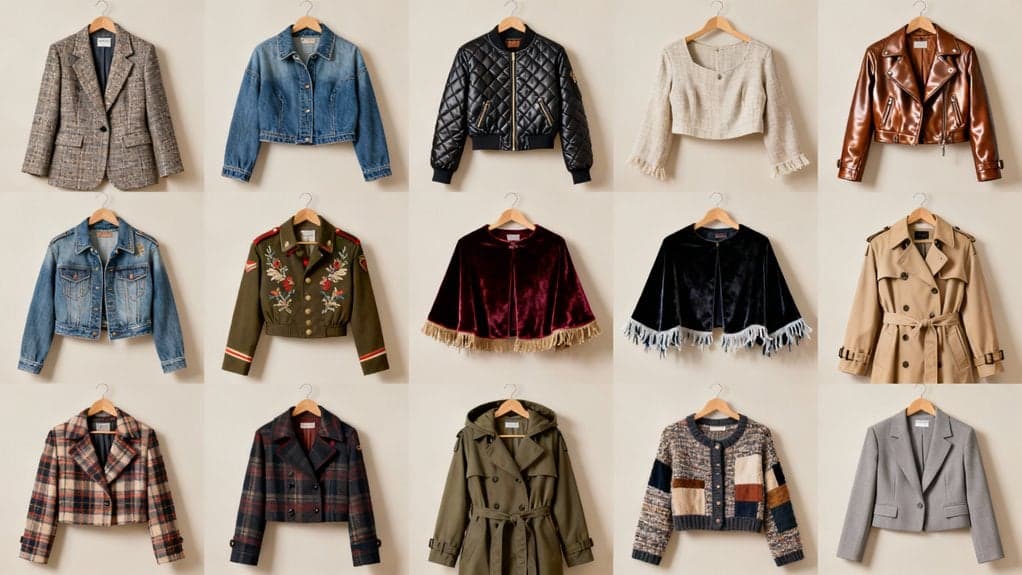
I’ve been sewing cropped jackets for years, and I can tell you they’re one of the most rewarding projects you’ll tackle. Whether you’re drawn to classic denim with contrast stitching or want to experiment with bold prints and custom collar details, there’s a style that’ll match your skill level and wardrobe needs. I’m sharing my fifteen favorite designs that range from beginner-friendly to advanced techniques, so you can find the perfect project to start building your collection.
Key Takeaways
- Classic denim and tailored blazers offer timeless styles with contrast stitching, flat-felled seams, and proper hemline placement at the natural waist.
- Activewear jackets use spandex with horizontal stretch alignment, zigzag stitches, and negative ease for compression fit and optimal performance.
- Statement jackets feature bold prints, metallic jacquards, or rhinestone embellishments, requiring careful pattern matching and precision pressing techniques.
- Urban-style jackets incorporate raw edges, exposed zippers, contrast stitching, and various collar styles for edgy, contemporary looks.
- Bomber construction uses ribbed neckbands and waistbands, while vintage designs require medium-weight fabrics and bagged lining for professional finishes.
Classic Denim Cropped Jacket With Contrast Stitching

A cropped denim jacket with contrast stitching sits at the intersection of timeless style and satisfying construction. I recommend starting with medium-weight denim—pre-washed to prevent shrinkage—and golden polyester thread for that classic look.
The key is those double rows of topstitching along shoulders, sleeves, and hems. Use a size 100 jeans needle to handle the thickness, and stick with 1.5 cm seam allowances for strength. Flat-felled seams give you durability while making your contrast work pop. Essential materials are key to achieving a polished finish.
I love reinforcing stress points at the yoke, underarms, and cuffs with back tacks. You can draft your own pattern or grab Simplicity 8845 for a reliable starting point. The boxy crop silhouette looks modern, and you’ll appreciate how those contrast details accentuate every construction line you’ve worked hard to perfect. This cropped jacket pairs beautifully with high-waisted jeans and heels to create an elongated, balanced silhouette.
Lightweight Linen Cropped Blazer for Spring

While denim brings structure and durability, linen delivers something entirely different for your cropped jacket collection—breathable elegance that’s perfect when temperatures rise. I love working with lightweight linen (150-200 gsm) for spring cropped blazers because it’s naturally cool and incredibly moisture-absorbent. Cropped silhouettes are trending this season, making linen an ideal choice for a stylish update.
When drafting your pattern, you’ll trace down to the waistline only, creating that chic cropped silhouette. I recommend incorporating waist darts for structure and two-piece tailored sleeves for a sharper fit. Press thoroughly between each construction step—linen fibers need this to relax and maintain clean edges.
For a statement piece, try wide lapels with a double-breasted front. Add a lining for longevity and polish, especially with lighter weaves. Consider leaving your jacket unlined to enhance comfort and nonchalance while embracing linen’s characteristic texture. Pastel or neutral shades maximize versatility across your spring wardrobe while keeping that fresh seasonal vibe.
Stretchy Spandex Cropped Activewear Jacket

Spandex transforms cropped jacket construction into something completely different from your typical tailoring projects—here, stretch and recovery become your primary design elements. I always align the fabric’s greatest stretch horizontally around the torso for that compression fit activewear needs. When working with spandex, consider experimenting with decorative techniques to elevate your design and make it uniquely yours.
Let your spandex rest flat for hours before cutting—this prevents distortion. I use weights instead of pins and cut single-layer to control slippage. Sharp shears are non-negotiable.
For construction, I rely on three-step zigzag or lightning bolt stitches with polyester thread. These prevent seam breakage when you’re moving. I double-stitch high-stress areas like side seams and reinforce armholes with extra rows. A stretch needle prevents skipped stitches and ensures smooth seaming throughout your jacket construction.
The key is negative ease—your pattern should be smaller than body measurements, letting the fabric stretch to fit and provide that athletic compression you’re after.
Bold Print Statement Cropped Jacket

When you’re ready to leave athletic compression behind, bold print cropped jackets let you express personality through fabric itself. I recommend starting with floral brocade, metallic jacquards, or graphic stripes—these fabrics create instant visual impact when cropped at the waist or hip bone. Additionally, consider incorporating creative twists to add unique flair to your design.
For construction, I focus on precision pressing at collar junctions and slow stitching around curves to maintain print alignment. Hidden pockets keep your design streamlined, letting the print shine without interruption. Pattern matching during cutting is vital for symmetrical panels. Cut tiny notches at the collar where it meets the shoulders to facilitate easier pinning and prevent fabric bunching during sewing.
I style mine with monotone fitted pieces to avoid overwhelming the eye. Try layering your bold print jacket over solid-color dresses or high-rise pants. Edge finishing in print-complementary colors guarantees clean lines, while neutral linings prevent bleed-through and support your fabric’s structure.
Rhinestone-Embellished Performance Cropped Jacket

Since rhinestone-embellished cropped jackets bridge the gap between athletic performance and showstopping style, I’ve learned that your fabric choice makes or breaks the entire project. I recommend stretch denim or moisture-wicking polyester blends—they handle movement while supporting heavy embellishment. Additionally, consider incorporating personalization options such as unique motifs or designs to make your jacket stand out even more.
For application, I always use hot-fix rhinestones with heat pressing. They withstand repeated washing and stage wear better than adhesive methods. Plan your design digitally first; consistent spacing prevents stones from detaching during performances.
Mix rhinestone sizes and colors strategically. I love combining clear stones with metallics for dynamic visual impact under stage lighting. Premium sequins or glitter applications can be layered with rhinestones to amplify the sparkle factor and create multidimensional texture.
Maintenance is essential: wash cold, air-dry flat, and check for loose stones regularly. Quality base jackets from Nike or Gildan provide the durability you’ll need for this investment piece.
Cropped Moto Jacket With Extended Collar

The extended collar transforms an ordinary cropped moto jacket into a statement piece I can’t stop sewing. I lengthen my collar pattern by 6 cm and offset the edge by 5 mm for proper roll. This creates a bold, structured neckline that’s perfect for layering over high-waisted pieces.
I always stay-stitch my neckline first, then assemble the collar with the top piece slightly smaller than the undercollar—this hides seams beautifully. After stitching right sides together and trimming corners, I turn it out and baste it to the neckline.
The cropped silhouette gives modern edge, while angled zippers and panel seaming add authentic moto details. I recommend interfacing for structure and trying contrasting fabrics like faux leather for extra drama. Additionally, consider using finishing techniques to ensure your jacket looks professionally made.
Bomber-Style Cropped Jacket With Ribbed Bands

Bomber jackets with ribbed bands give me that perfect casual-yet-polished look I love for everyday wear. I source my ribbing from old sweaters, cutting 1-inch strips for neckbands and 3-inch strips for waistbands. The construction starts with closing those distinctive V-shaped shoulder seams, then attaching ribbing while stretching it around curved edges.
For neckbands, I match center back notches and stretch the ribbing from that point to each shoulder. Sleeve cuffs require marking halfway points on both pieces, then stretching the ribbing continuously while stitching. The waistband gets reduced slightly to create that signature gathered effect at the hem.
I’ve found using tabs at the hem prevents twisting during attachment. Press all seams afterward, and you’ll have a professional bomber jacket from recycled materials. Incorporating upcycling techniques not only enhances sustainability but also adds a unique flair to your creation.
Lined Cotton Cropped Jacket for All-Season Wear

While bomber jackets shine with their sporty ribbed details, I often reach for a lined cotton cropped jacket when I need something that works from spring mornings straight through autumn evenings. I choose midweight quilting cotton for the shell—it’s breathable and resists pilling beautifully. Pre-washing prevents surprises later!
Adding a polyester or rayon lining transforms everything. It creates clean interior finishes, helps the jacket slip easily over layers, and adds just enough insulation without bulk. I sew the shell and lining together at the neckline and lapels, then bag the hem to prevent peeking. Cropped jackets are versatile staples that can be styled for various occasions.
The cropped length hits right at my high waist, flattering multiple body types. I’ve customized mine with notched lapels and contrasting lining—it shifts effortlessly between casual coffee runs and professional meetings. For those working with directional prints like paisley, pay special attention to template orientation when cutting your fabric pieces.
High-Hip Cropped Jacket With Reshaped Pocket Flaps

When I want my cropped jacket to feel modern and distinctly mine, I adjust the hem to high-hip length and reshape the pocket flaps into something beyond basic rectangles. I start with a standard jacket pattern, shortening the bodice to sit at the top of my hips. Then I redraw those pocket flaps—angled, curved, or pointed—for visual interest that sets my jacket apart.
I use medium-weight wovens like denim or twill, adding interfacing to the flaps so they hold their shape beautifully. Pressing at every stage is non-negotiable for crisp edges. I attach the flaps before assembling the body, then finish with topstitching that highlights my custom shapes. Pressing seams open after each step ensures every detail lies flat and professional-looking. Paired with high-waisted bottoms, this silhouette elongates my legs while keeping things functional and uniquely mine.
Waist-Length Cropped Jacket With Set-In Sleeves

Because set-in sleeves offer unmatched shoulder definition, I choose them whenever I want my waist-length cropped jacket to look polished and tailored rather than casual. I rely on patterns like The Assembly Line Cropped Jacket or Deer and Doe Fougere Jacket as solid starting points.
For construction, I focus on precise armscye measurements and ease the sleeve head carefully between notches using gathering stitches. This prevents puckering, especially with medium-weight fabrics like cotton twill or denim. I always guarantee my hem lands at my natural waistline—this creates balanced proportions with high-waisted bottoms.
I typically add a separating zipper for easy on-and-off wear. When working with heavier fabrics, I include lining for comfort and clip armscye seam allowances to reduce bulk. For a more versatile option, I sometimes install a two-way zipper that allows me to adjust the jacket’s fit and style while wearing it. Press thoroughly for professional results.
Cropped Jacket Pattern Hack From Existing Designs

I’ve discovered that shortening existing jacket patterns is often faster than searching for the perfect cropped design. Here’s my approach: I hold the pattern pieces against my body and mark where my natural waistline falls, adding one inch for seam allowance. I adjust the front, back, side panels, linings, and facings equally by cutting from the bottom edge—not the lengthen/shorten lines—to maintain proper proportions.
For trench coats, I crop at the lower pocket notch or two inches above for high hip placement. The Chilton pattern works beautifully this way, leaving sleeves and collar unchanged. I always make a muslin first before cutting expensive fabric.
You can also modify necklines by removing collar pieces entirely for a Chanel-inspired look, or extend collars for dramatic flair. Consider eliminating pattern pieces like belt loops or epaulettes to simplify construction and create a more streamlined silhouette.
Tailored Cropped Blazer With Pressed Seam Finish

A tailored cropped blazer lives or dies by its hemline placement—I always position mine just above or at my natural waist for that proper cropped effect. Too short looks awkward, while too long loses the silhouette entirely.
I use a 0.5-inch seam allowance throughout construction, marking all lines before pinning to prevent fitting disasters. The lapel forms your collar and extends down the entire front opening. I pin both lapel sides together, push everything inside, then stitch around the lapel and hemline before turning right side out.
Here’s my trick: leave an opening in the lining for turning, then hand-tack it closed after attaching the collar. This pressed seam finish gives you that award-winning luxury look without the costume vibes. The lower button stance creates a flattering V-shape that allows for effortless layering underneath.
Layering Cropped Jacket for Transitional Weather

When temperatures swing wildly between morning frost and afternoon warmth, I reach for my cropped jacket as the ultimate problem-solver in my wardrobe. I’ve mastered the three-layer rule: fitted tee as my base, lightweight cardigan in the middle, and my cropped corduroy jacket on top. This system lets me shed layers as needed without looking disheveled.
I pair mine with high-waisted jeans to balance proportions perfectly. Texture mixing—think corduroy over cotton knits—adds visual depth while keeping things breathable. I choose lightweight fabrics like linen and rayon that won’t overheat me during unpredictable weather shifts. Accessories like boots and sunglasses add extra dimension to complete the look.
My favorite trick? Ensuring each layer looks intentional on its own. When I remove my jacket indoors, I’m still put-together. Add ankle boots and a scarf, and you’re ready for anything spring throws your way.
Edgy Cropped Jacket With Custom Collar Details

Since I started experimenting with collar designs, my cropped jackets have gone from basic wardrobe staples to genuine conversation starters. I’ve learned that extending collar pattern pieces 6 cm beyond standard length creates striking visual accents that transform the entire silhouette.
Here’s my approach: I draft custom collars by adjusting the neckline width to 3.5 inches and depth to 1 inch for modern proportions. The secret is offsetting the collar’s outer edge by 5 mm—this guarantees proper roll and eliminates visible seam ridges. An easy camp collar creates a perfectly relaxed look that works beautifully with the cropped silhouette.
I love adding notched, oversized, or asymmetrical collar variations to my cropped patterns. Raw edges, contrast stitching, and exposed hardware like bold zippers reinforce that urban edge. McCalls 8533 offers excellent templates if you’re starting out.
Vintage-Inspired Cropped Jacket Using PDF Patterns

PDF patterns have revolutionized how I approach vintage-inspired cropped jackets, giving me instant access to authentic 1940s–1960s silhouettes without hunting through dusty pattern archives. I’m drawn to patterns featuring shawl collars, yokes, and waistband details that capture that distinctly retro proportion sitting just above my natural waist.
What’s impressed me most is the inclusive sizing—I’ve found patterns ranging from 32″ to 60″ bust measurements with clear adjustment options. The instructions accommodate different skill levels, from confident beginners tackling unlined versions to intermediate sewists mastering lined, structured fits.
I recommend medium to heavyweight fabrics like wool flannel, tweed, or velveteen with rayon lining. The bagged lining technique provides a professional interior finish that elevates the overall quality of the garment. Remember to check pattern matching requirements for plaids—it’s worth the extra yardage for authentic vintage aesthetics that make fellow sewing enthusiasts stop and ask where I bought it.
Conclusion
I can’t wait to see which cropped jacket you’ll tackle first! Remember, there’s no right or wrong choice—pick the style that speaks to you and matches your skill level. Don’t hesitate to mix techniques from different projects or adjust patterns to fit your vision. I’m here cheering you on, and I’d love to hear about your progress. Share your makes with our community, and let’s inspire each other to keep creating!

Keep reading
20 Latest Crochet Neck Warmer Ideas To Try In 2025!
Link up with the 20 best crochet neck warmers that blend warmth and style—discover which designs will transform your winter wardrobe!
20 Amazing Crochet Jewelry Ideas
Amazing crochet jewelry ideas await you, featuring unique designs that will inspire your creativity and elevate your accessory game to new heights.
20 Amazing Crochet Kit Ideas
Navigate through 20 amazing crochet kit ideas that spark creativity and joy; discover the perfect project to ignite your crafting passion!
Need personal guidance?
Talk to an advisor
Our care experts are here to help you make the right choice — for free.