7 Best Leg Stretches for Sore Legs When You Are 40+
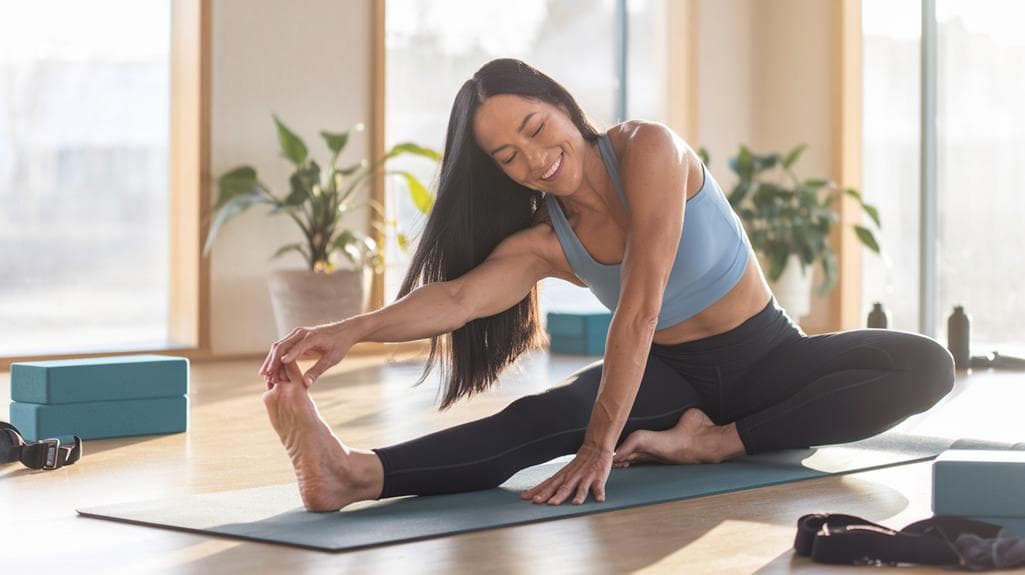
Your legs feel like they've been through a marathon, even if you just walked around the block. It's no wonder you're searching for effective stretches to ease that soreness and get back to feeling like yourself. By incorporating a few simple yet powerful leg stretches, you can promote recovery and flexibility. But which ones should you focus on to truly make a difference? Here are the seven best leg stretches that could transform your post-activity routine and help you bounce back with ease.
Key Takeaways
- Incorporate dynamic stretches like leg swings and lunges before workouts to warm up sore leg muscles effectively.
- Static stretches such as the hamstring stretch provide relief and enhance flexibility when held for 15-30 seconds.
- The quadriceps stretch alleviates soreness in the front thighs; ensure knees stay together while pulling the heel towards the glutes.
- Use the butterfly stretch to target inner thighs and improve mobility by pressing knees outward with elbows while holding the position.
- Regularly practice the figure four stretch to relieve tension in hips and glutes, enhancing overall leg health and mobility.
Hamstring Stretch
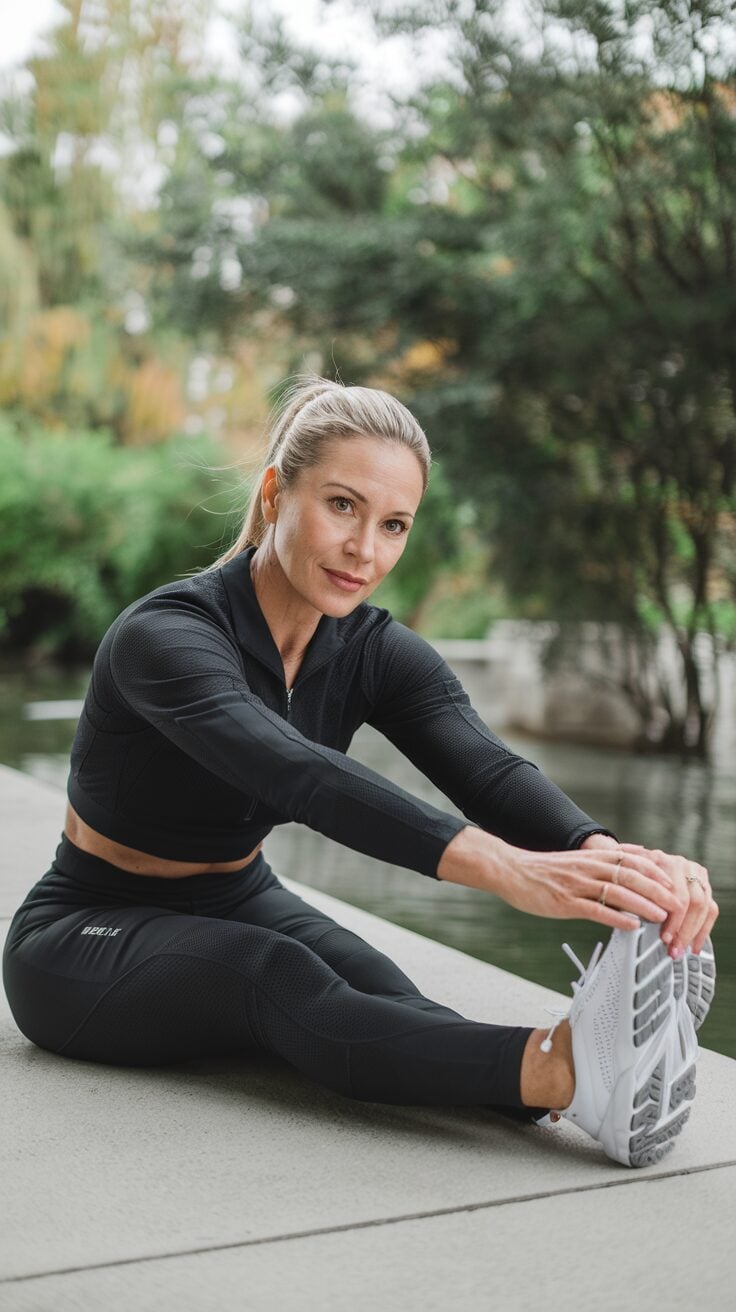
When you're dealing with sore legs, it's crucial to ease into effective stretches, and the hamstring stretch is a great place to start. Your hamstrings, located at the back of your thighs, can tighten after physical activity, leading to discomfort.
Begin with dynamic stretching to warm up your muscles—try leg swings or gentle lunges to increase blood flow. This prepares your body for deeper stretches.
Once you've warmed up, shift to static stretching for the hamstrings. Sit on the floor with one leg extended and the other bent. Reach toward your toes on the extended leg, feeling a gentle pull in the back of your thigh.
Hold this position for about 15-30 seconds, keeping your back straight and avoiding any bouncing, which could strain your muscles.
Quadriceps Stretch

Regularly incorporating a quadriceps stretch into your routine can considerably relieve soreness in the front of your thighs. This stretch is particularly beneficial after activities that heavily engage your quads, such as running or cycling.
To perform the quadriceps stretch, stand tall and grab your ankle, pulling your heel toward your glutes. Keep your knees close together and maintain an upright posture. Hold the stretch for 15-30 seconds, breathing deeply to enhance relaxation.
For best results, consider combining this static stretch with dynamic stretching exercises before your workouts. Dynamic stretching prepares your muscles for movement, reducing the risk of injury and soreness.
Additionally, foam rolling can be an excellent companion to your stretching routine. By using a foam roller on your quadriceps, you can alleviate muscle tightness and improve blood flow, further promoting recovery.
Calf Stretch

After focusing on the quadriceps, it's important not to overlook the calves, especially if you've engaged in activities that require significant leg use. The calf muscles, located at the back of your lower leg, play an essential role in walking, running, and jumping.
When these muscles become sore, stretching can aid in calf muscle recovery and enhance your overall flexibility.
To perform a calf stretch, stand facing a wall and place your hands against it for support. Step back with one leg, keeping it straight while bending the front knee. You should feel a gentle pull in the calf of the straight leg. Hold this position for 15 to 30 seconds, then switch legs.
This stretch not only alleviates tightness but also promotes blood flow, which is critical for recovery.
Incorporating calf stretches into your routine can provide multiple benefits, including increased range of motion and reduced risk of injury.
Butterfly Stretch

The butterfly stretch is a highly effective exercise for targeting the inner thighs and groin area, making it an essential addition to your recovery routine. By regularly incorporating this stretch, you can enhance flexibility, reduce muscle tension, and improve overall mobility.
These benefits of butterfly stretching are particularly helpful after intense workouts or prolonged periods of sitting.
To perform the butterfly stretch, sit on the floor with your back straight, bringing the soles of your feet together. Allow your knees to fall outward while gently pressing down on them with your elbows for a deeper stretch. Hold this position for 15 to 30 seconds, breathing deeply to help release tension.
There are variations of butterfly stretches you might consider. For instance, you can lean forward slightly to increase the stretch in your groin, or you can perform the stretch while seated on an exercise ball for added balance and support.
Remember to listen to your body; if you feel any pain, ease off the stretch. Incorporating the butterfly stretch into your routine can foster recovery and promote better leg health, ultimately enhancing your performance in daily activities.
Figure Four Stretch

Another effective stretch to incorporate into your recovery routine is the figure four stretch, which specifically targets the hips, glutes, and lower back. This stretch helps relieve tension and discomfort in these areas, making it an excellent choice for sore legs.
By performing the figure four stretch, you can improve flexibility, enhance circulation, and promote overall muscle recovery.
To do the figure four stretch, lie on your back with your knees bent. Cross one ankle over the opposite knee, forming a "4" shape. Gently pull the uncrossed leg toward your chest while keeping your head and shoulders relaxed. Hold the stretch for 20-30 seconds, then switch sides.
There are several figure four variations to take into account. For a deeper stretch, you can perform it while sitting or standing. If you're looking for an added challenge, try using a resistance band to enhance the stretch's effectiveness.
Incorporating the figure four stretch into your routine can greatly alleviate soreness and improve mobility.
Listen to your body, and always stretch within your comfort zone to avoid injury.
Seated Forward Bend

While you may feel tightness in your hamstrings and lower back after a workout, the Seated Forward Bend is an excellent stretch to help alleviate that discomfort. This stretch not only promotes flexibility but also calms the mind, making it a valuable addition to your post-exercise routine.
To perform the Seated Forward Bend effectively, follow these steps:
- Sit on the floor with your legs extended in front of you, keeping your back straight.
- Inhale deeply and raise your arms overhead, lengthening your spine.
- Exhale as you hinge at your hips, reaching forward towards your feet.
- Hold the position for 15-30 seconds, breathing deeply, allowing your body to relax into the stretch.
While this stretch has numerous benefits for flexibility, you should be aware of common mistakes. Avoid rounding your back, which can lead to strain, and don't force your body into the position.
Instead, listen to your body, and ease into the stretch to reap maximum benefits. By practicing the Seated Forward Bend correctly, you can effectively alleviate soreness and improve your overall flexibility.
Standing Side Stretch

Incorporating the Standing Side Stretch into your routine can greatly enhance flexibility and relieve tension in your sides and lower back. This stretch is particularly beneficial after a long day or an intense workout, as it targets the muscles that often become tight.
To perform the Standing Side Stretch, stand tall with your feet shoulder-width apart. Inhale deeply, raising your right arm overhead while keeping your left arm relaxed at your side. As you exhale, lean to the left, feeling the stretch along your right side. Hold this position for 15-30 seconds, breathing deeply. Return to the center and switch sides.
Practicing this stretch regularly can offer significant yoga benefits, including improved posture and increased range of motion.
It's a simple yet effective flexibility technique that anyone can incorporate, regardless of fitness level.
Frequently Asked Questions
How Often Should I Stretch for Sore Legs?
You should stretch regularly for sore legs. Incorporate dynamic stretching before activities and static stretching afterward. Aim for at least three to four times a week to improve flexibility and reduce discomfort effectively.
Can Stretching Prevent Muscle Soreness?
Stretching can't entirely prevent muscle soreness, but it does enhance muscle recovery and flexibility. By incorporating stretching benefits into your routine, you may reduce soreness and improve overall performance, helping your body feel better post-exercise.
What Time Is Best for Stretching?
The best time for stretching is during your morning routine or post workout. Incorporating stretches into these times enhances flexibility and recovery, helping you feel better and reduce the risk of soreness effectively.
Are There Any Risks Associated With Leg Stretching?
Stretching offers numerous benefits, but risks include overstretching or injury. It's essential you choose appropriate types of stretches and listen to your body. Gradual progress minimizes risks while enhancing flexibility and mobility effectively.
Should I Warm up Before Stretching?
Imagine training for a marathon. You should definitely warm up before stretching. Dynamic warm-ups prepare your muscles, while static stretches improve flexibility. This approach minimizes injury risk and enhances overall performance, keeping you safe and effective.
Conclusion

Incorporating these seven leg stretches into your routine can feel like having a trusty old sports car in your garage—reliable and ready to rev up your recovery. By targeting key muscle groups, you not only ease soreness but also enhance flexibility, setting the stage for better performance in future workouts. Remember, consistency is key. So, make these stretches a regular part of your post-workout ritual, and you'll keep your legs feeling their best for longer.
Keep reading

20 Latest Crochet Neck Warmer Ideas To Try In 2025!
Link up with the 20 best crochet neck warmers that blend warmth and style—discover which designs will transform your winter wardrobe!

20 Amazing Crochet Jewelry Ideas
Amazing crochet jewelry ideas await you, featuring unique designs that will inspire your creativity and elevate your accessory game to new heights.

20 Amazing Crochet Kit Ideas
Navigate through 20 amazing crochet kit ideas that spark creativity and joy; discover the perfect project to ignite your crafting passion!
Need personal guidance?
Talk to an advisor
Our care experts are here to help you make the right choice — for free.