7 Best Interval Strength Training Exercises To Try When 40

Research shows that incorporating interval strength training can increase your metabolic rate by up to 15% post-workout. This means not only are you building muscle, but you're also maximizing calorie burn long after you've finished exercising. With so many options available, it can be challenging to determine which exercises yield the best results. Let's explore seven standout moves that can efficiently enhance your fitness routine while ensuring you target all major muscle groups effectively.
Key Takeaways
- Incorporate burpees for a full-body workout that boosts strength and endurance while enhancing cardiovascular fitness.
- Use kettlebell swings to build power in the posterior chain and improve overall workout effectiveness with proper technique.
- Include mountain climbers to elevate heart rate and strengthen the core, targeting abs, shoulders, and legs dynamically.
- Add dumbbell thrusters to challenge strength and cardiovascular fitness while engaging legs, core, and shoulders through a combined movement.
- Integrate resistance band rows to effectively target back muscles, improving posture and upper body stability in your routine.
Burpee Blast

Releasing your energy with burpees can transform your workout routine into an exhilarating experience. These full-body exercises engage multiple muscle groups, helping you build strength and endurance simultaneously.
You'll find that burpees not only boost your cardiovascular fitness but also enhance your agility and coordination.
If you're new to burpees or find them challenging, don't hesitate to explore burpee modifications. Start by stepping back into the plank position instead of jumping, or drop to your knees for a modified push-up.
These adjustments will help you build strength and confidence, making burpees more accessible and enjoyable.
Incorporating burpees into your workout offers numerous benefits. They can be done anywhere, require no equipment, and fit seamlessly into any interval training routine.
You'll feel the power of combining strength and cardio as you perform them at high intensity. Plus, they're a fantastic way to challenge yourself and push through physical barriers.
Kettlebell Swings
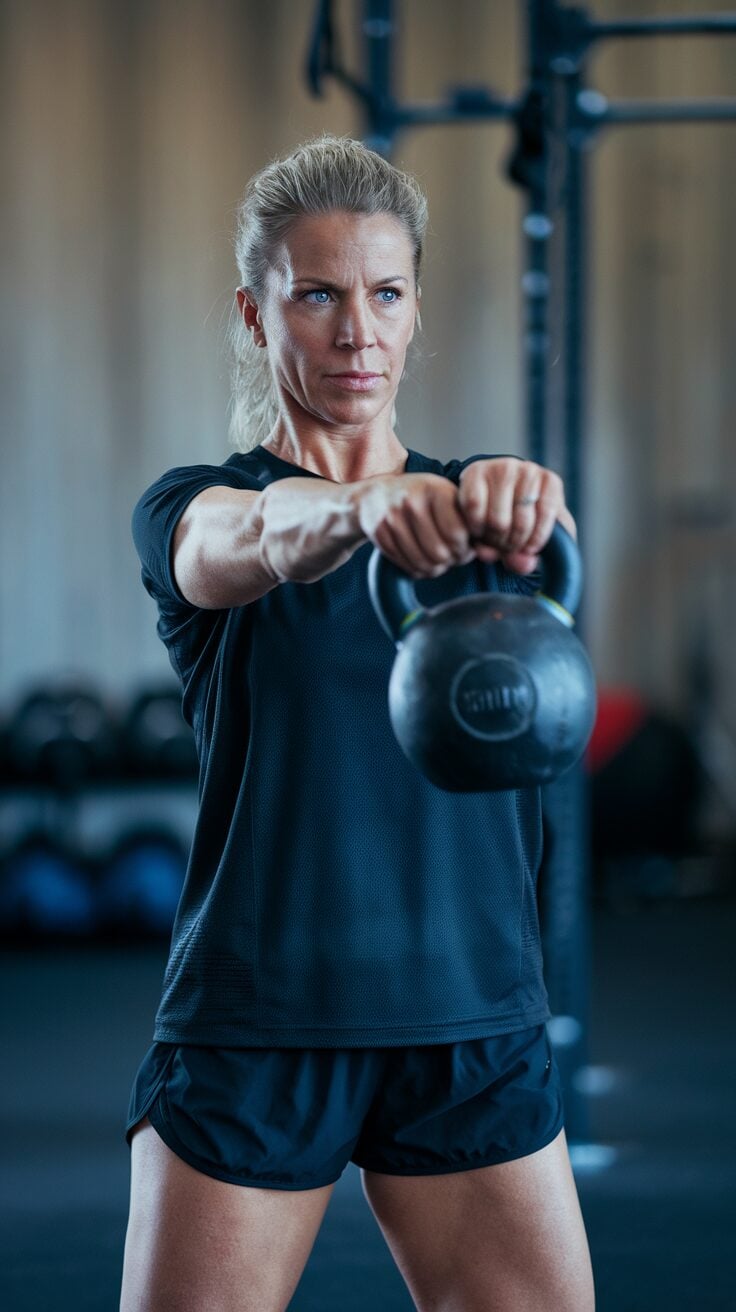
Kettlebell swings are one of the most effective exercises for building strength and power in your posterior chain. When done correctly, they engage your glutes, hamstrings, and core, making them a fantastic addition to your workout routine.
To maximize your results, focus on your kettlebell technique, ensuring that you maintain proper form throughout the movement.
Here are some tips to perfect your kettlebell swings:
- Start with your feet shoulder-width apart to create a stable base.
- Hinge at the hips instead of squatting down; this helps activate your posterior chain.
- Engage your core to maintain balance and protect your lower back.
- Explore swing variations, like the single-arm swing or the kettlebell snatch, to challenge different muscle groups.
Mountain Climbers

After honing your strength with kettlebell swings, it's time to incorporate mountain climbers into your routine for a dynamic cardio and core workout. This exercise not only elevates your heart rate but also targets your abs, shoulders, and legs.
To master the mountain climber technique, start in a plank position with your hands directly under your shoulders. Keep your body in a straight line and engage your core. Quickly draw one knee toward your chest, then switch legs in a running motion. Maintain a steady pace and focus on form to maximize effectiveness and prevent injury.
There are several mountain climber variations to keep your workouts fresh and challenging. For instance, try cross-body mountain climbers, where you bring your knee towards the opposite elbow for added oblique work.
Another variation is the slow-motion mountain climber, which emphasizes control and stability, enhancing strength and endurance.
Incorporating mountain climbers into your interval training won't only boost your cardio fitness but also improve your core stability. So, get moving and watch your strength and endurance soar!
Dumbbell Thrusters

Dumbbell thrusters are a powerhouse exercise that combines a squat and an overhead press, giving you a full-body workout in one fluid movement. This dynamic exercise not only challenges your strength but also boosts your cardiovascular fitness. Understanding the right thruster techniques is key to maximizing your workout.
To get the most out of dumbbell thrusters, keep these tips in mind:
- Maintain proper form: Keep your back straight and core engaged throughout the movement.
- Choose the right weight: Start with lighter dumbbells to focus on technique before increasing the weight.
- Use a full range of motion: Squat low and fully extend your arms overhead to activate all muscle groups.
- Breathe correctly: Inhale as you squat down and exhale as you press up.
The dumbbell benefits are immense, as this exercise targets multiple muscle groups, including your legs, core, and shoulders.
Incorporating dumbbell thrusters into your routine can enhance your strength, endurance, and overall fitness level. So grab those dumbbells and get ready to feel the burn!
Box Jumps

Box jumps are an explosive exercise that can greatly enhance your power and agility. By incorporating box jumps into your workout routine, you'll experience numerous box jump benefits, like improved leg strength, better coordination, and increased cardiovascular fitness. This exercise is perfect for athletes and fitness enthusiasts alike.
To perform the box jump correctly, focus on mastering the box jump technique. Start by standing a few feet away from the box, feet shoulder-width apart. Bend your knees slightly and swing your arms back to prepare for the jump. As you explode upward, drive your knees toward your chest and use your arms for momentum.
Aim to land softly on the box with your feet fully on the surface and your knees slightly bent. This helps absorb the impact and reduces the risk of injury.
Aim for a box height that challenges you but allows you to land safely. As you become more comfortable, you can gradually increase the height. Remember, consistency is key!
Add box jumps to your interval strength training regimen, and you'll soon notice significant improvements in your overall fitness and athletic performance.
Push-Up Variations
Exploring push-up variations can take your strength training to the next level. These exercises not only build upper body strength but also enhance your overall fitness.
By incorporating different push-up styles, you can target various muscle groups and keep your workouts fresh and challenging.
Here are some effective push-up variations to try:
- Explosive Push-Ups: Propel your body off the ground with each rep, engaging your chest and triceps for a powerful workout.
- Stability Push-Ups: Use a stability ball or balance disc to challenge your core while performing standard push-ups, improving your balance and stabilization.
- Diamond Push-Ups: Place your hands close together to form a diamond shape, targeting your triceps more intensely.
- Wide Grip Push-Ups: Position your hands wider than shoulder-width to focus on your chest muscles.
Incorporating these variations into your routine can create an engaging and effective strength training program.
Remember to maintain proper form and gradually increase the intensity as you progress.
You'll not only build strength but also enhance your endurance and overall fitness.
Resistance Band Rows

Resistance band rows are a fantastic addition to your strength training routine, offering a versatile way to target your back muscles. Using band strength, you can effectively engage your lats, rhomboids, and traps, helping to build a stronger, more defined back.
To get started, anchor the resistance band at a low point, such as under your feet or a sturdy object. Stand with your feet shoulder-width apart, grasp the band with both hands, and pull it towards your torso. Focus on maintaining a straight back and squeezing your shoulder blades together as you row. This technique is essential for maximizing the effectiveness of your workout.
You can also experiment with different row techniques. For instance, try single-arm rows for added core engagement, or switch to an overhand grip to hit different muscle fibers. Incorporating resistance band rows into your routine not only enhances your strength but also improves your posture and overall upper body stability.
Make these rows a regular part of your workouts, and watch your back strength and definition improve over time. Remember, consistency and proper form are key to achieving your fitness goals!
Frequently Asked Questions
How Often Should I Incorporate Interval Strength Training Into My Routine?
You should incorporate interval strength training two to three times a week. This frequency keeps your workouts varied and effective, preventing plateaus while boosting endurance and strength. Balance it with other training for best results!
What Are the Benefits of Interval Strength Training Compared to Traditional Workouts?
Interval strength training boosts muscle endurance and enhances fat loss more efficiently than traditional workouts. You'll enjoy shorter sessions with greater intensity, leading to quicker results and improved overall fitness, keeping you motivated and engaged.
Can Beginners Perform These Exercises Safely?
Yes, you can perform these exercises safely by following safety precautions and using beginner modifications. Start slow, focus on form, and gradually increase intensity. Remember, listening to your body is key for a successful workout journey.
What Equipment Do I Need for These Interval Strength Training Exercises?
Imagine transforming your workouts! For effective interval strength training, you'll need dumbbell variations for versatility and resistance bands for added intensity. These tools empower you to build strength and endurance, making every session count.
How Long Should Each Interval Last During a Workout Session?
For effective interval durations, aim for 20 to 60 seconds of intense effort, followed by equal or longer rest. Adjust these times based on your workout intensity and fitness level to maximize results while staying energized.
Conclusion

So, if you thought interval strength training was just about lifting weights, think again! By mixing in burpees, kettlebell swings, and other dynamic moves, you're not just building muscle; you're also boosting your heart health—who knew sweating could feel this good? Embrace the challenge and let these seven exercises transform your routine. After all, the irony of getting fit is that it often feels like a workout, but the rewards are totally worth the effort!
Keep reading

20 Latest Crochet Neck Warmer Ideas To Try In 2025!
Link up with the 20 best crochet neck warmers that blend warmth and style—discover which designs will transform your winter wardrobe!

20 Amazing Crochet Jewelry Ideas
Amazing crochet jewelry ideas await you, featuring unique designs that will inspire your creativity and elevate your accessory game to new heights.

20 Amazing Crochet Kit Ideas
Navigate through 20 amazing crochet kit ideas that spark creativity and joy; discover the perfect project to ignite your crafting passion!
Need personal guidance?
Talk to an advisor
Our care experts are here to help you make the right choice — for free.