7 Best Balancing Yoga Poses
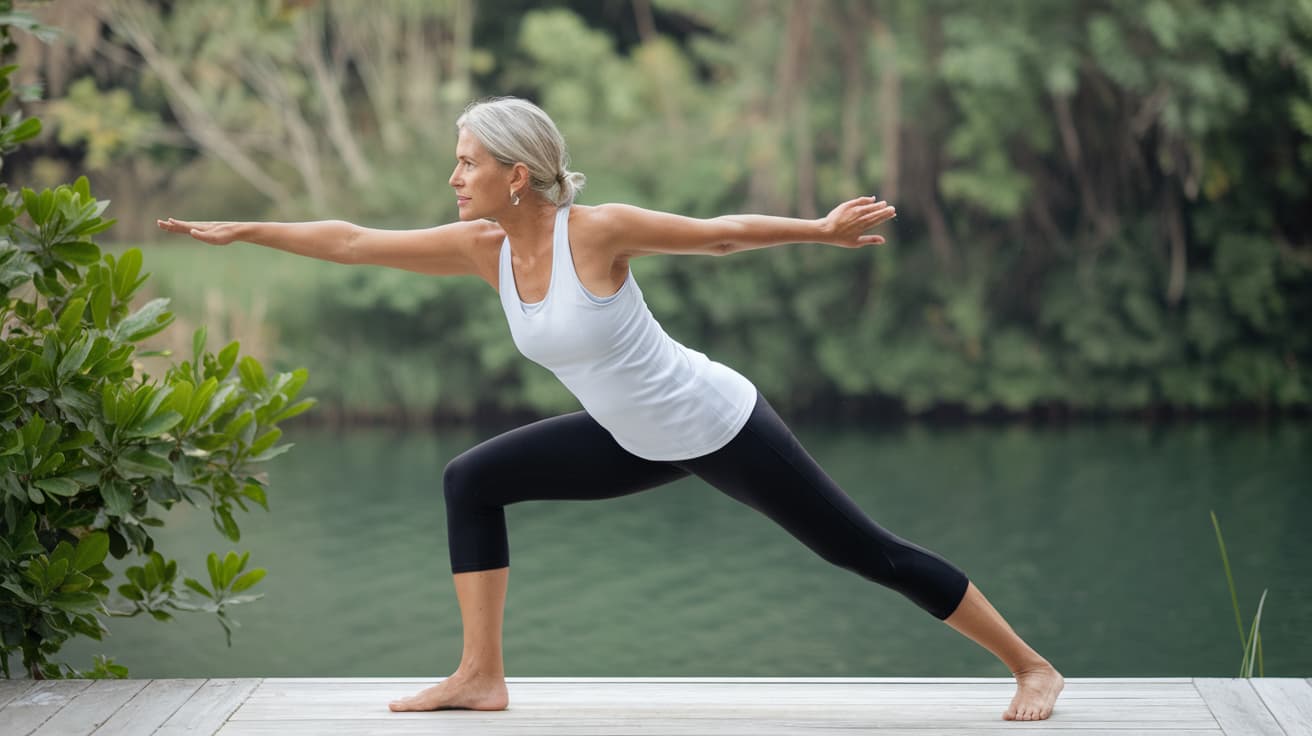
Is it true that mastering balancing yoga poses can greatly enhance your physical and mental well-being? Many practitioners believe that poses like Tree Pose and Warrior III not only challenge your stability but also cultivate a deeper sense of focus and mindfulness. As you explore these asanas, you'll discover how each one uniquely contributes to your overall strength and flexibility. Curious about which poses can transform your practice and daily life?
Key Takeaways
- Tree Pose enhances balance and focus by grounding one foot and aligning the body for improved stability.
- Warrior III builds core strength and balance, requiring concentration on a fixed point to maintain posture.
- Eagle Pose deepens stability and flexibility, engaging legs and core while promoting proper alignment through crossed limbs.
- Half Moon Pose strengthens core and legs, encouraging concentration and alignment with variations for deeper stretches.
- Dancer's Pose enhances balance and emotional well-being by grounding on one leg while lifting the other, promoting strength and focus.
Tree Pose
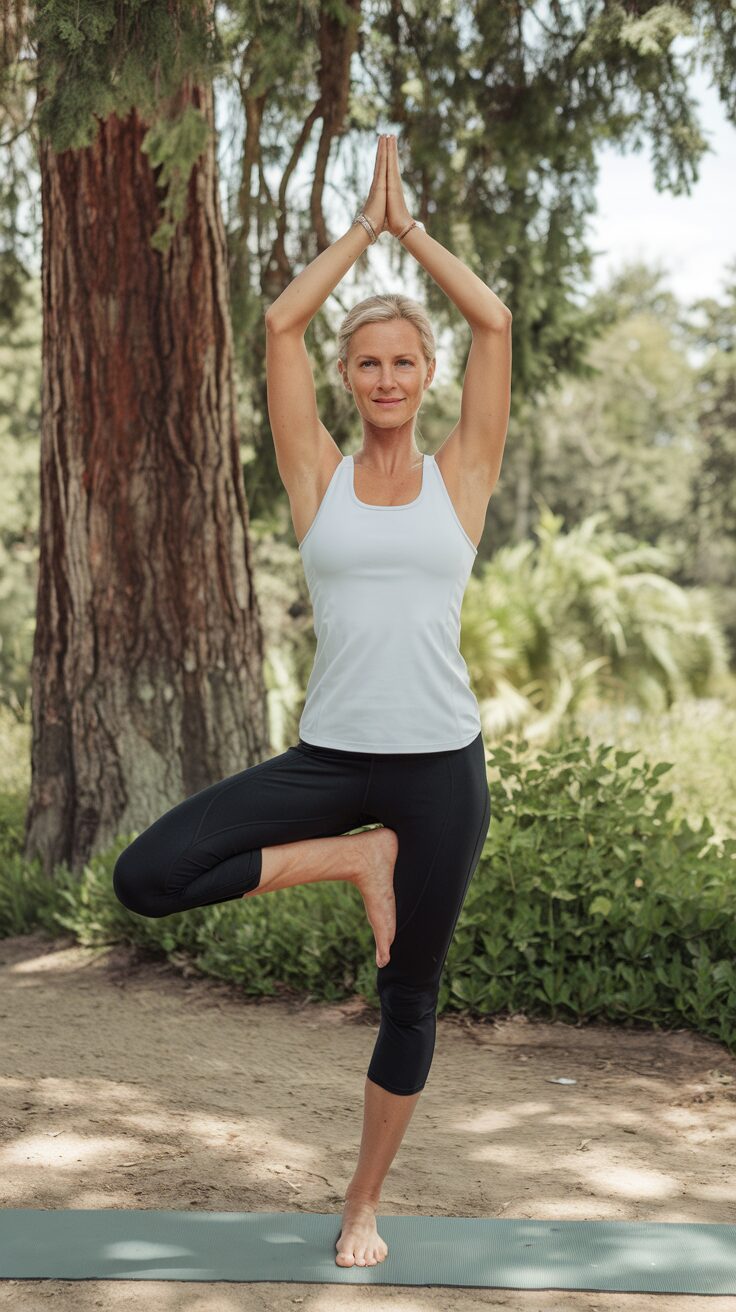
Tree Pose, often practiced in yoga sessions, is a fantastic way to enhance your balance and focus. To begin, stand tall with your feet together. Ground your left foot firmly into the mat and shift your weight onto it. As you lift your right foot, place it against your inner thigh or calf—avoiding the knee.
Now, engage your core to support your posture alignment. Bring your hands together at your heart, or extend them overhead, palms facing each other. Remember to keep your shoulders relaxed and your gaze fixed on a point in front of you. This focus is key to mastering balance techniques.
As you hold the pose, breathe deeply. Feel the strength in your standing leg and the stability in your core. If you wobble, don't worry—it's all part of the process! Just adjust and find your center again.
Practice regularly, and you'll notice improvement in both your physical balance and mental clarity. When you're ready, switch sides and repeat. Embrace the journey, and enjoy the grounding experience Tree Pose offers.
With time, you'll cultivate better balance and posture alignment in your daily life.
Warrior III
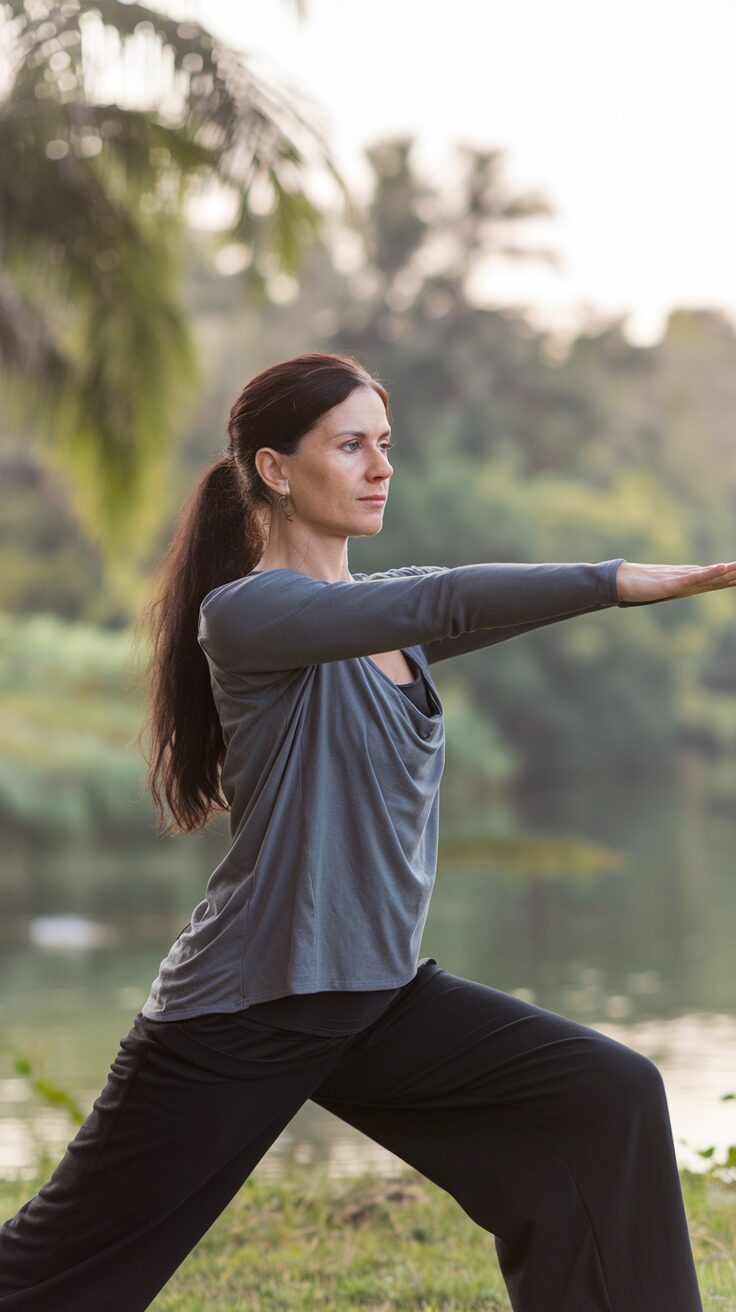
In your next yoga session, Warrior III can elevate your balance and strength to new heights. This pose is fantastic for honing your balance techniques while building core strength.
Start by standing tall in Mountain Pose. As you inhale, shift your weight onto your right foot and lift your left leg behind you, keeping it straight. Your torso should lean forward, parallel to the ground, creating a straight line from your fingertips to your toes.
Engage your core as you extend your arms forward, either reaching out or keeping them at your sides. Focus your gaze on a fixed point in front of you to help maintain your balance. Remember, it's okay if you wobble a bit; that's part of the process!
Breathe deeply, feeling your body stabilize and strengthen with each inhale and exhale.
Hold Warrior III for five breaths, then gently return to Mountain Pose and switch sides. This powerful pose not only enhances your physical balance but also cultivates mental focus and determination.
Embrace the challenge, and you'll find your confidence soaring as you master Warrior III.
Eagle Pose
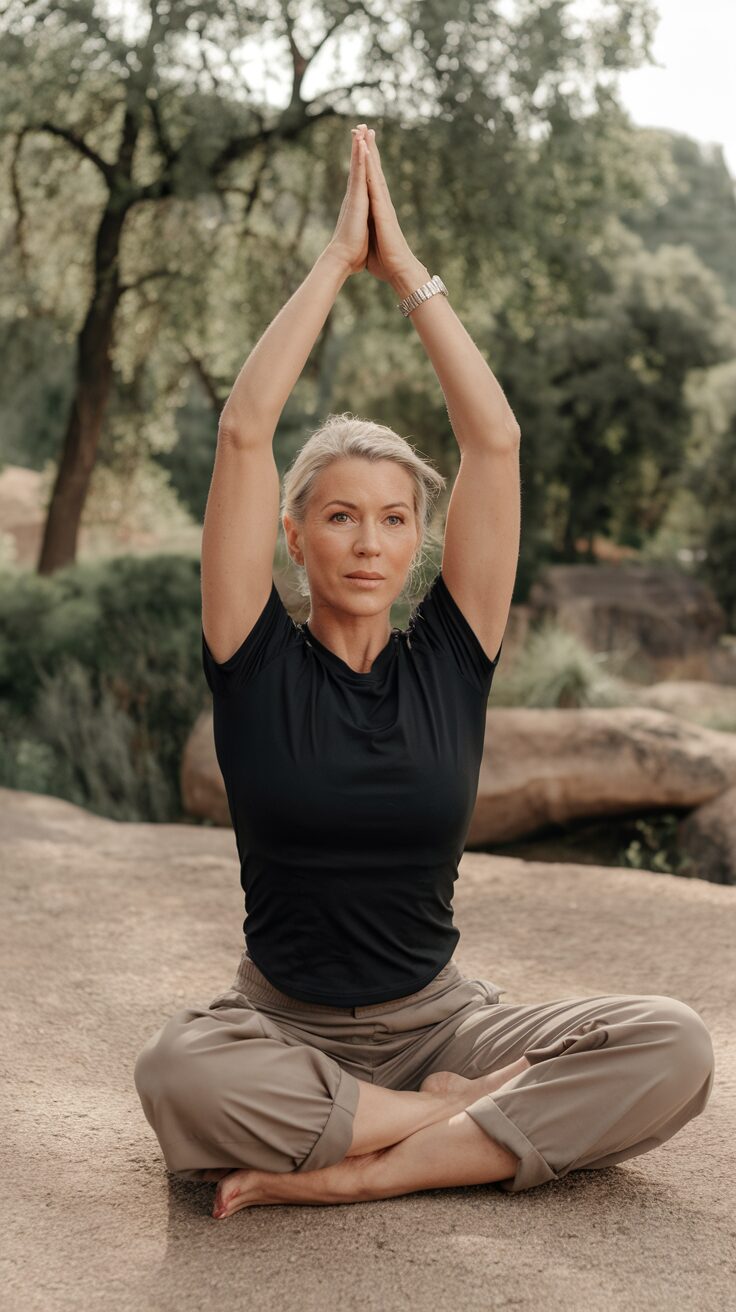
After honing your balance with Warrior III, it's time to explore Eagle Pose, a fantastic way to deepen your stability while also enhancing flexibility.
To begin, stand tall and bend your knees slightly. Cross your right leg over your left, tucking your right foot behind your left calf. Extend your arms forward, crossing them at the elbows, and wrap your right arm around your left. Lift your elbows while keeping your shoulders relaxed.
As you hold this pose, focus on your breath. You'll find that holding Eagle strengthens your legs and improves your core stability. The Eagle benefits also include increased concentration and a sense of calm, making it an excellent choice for centering your mind.
For those looking to challenge themselves, try different Eagle variations. You can experiment with a slight lean forward or incorporate a gentle twist in your torso.
These variations can enhance the stretch in your shoulders and hips while maintaining your balance. Remember, practice makes perfect. So take your time, and don't be discouraged if you wobble at first—every attempt helps you grow stronger and more balanced!
Half Moon Pose
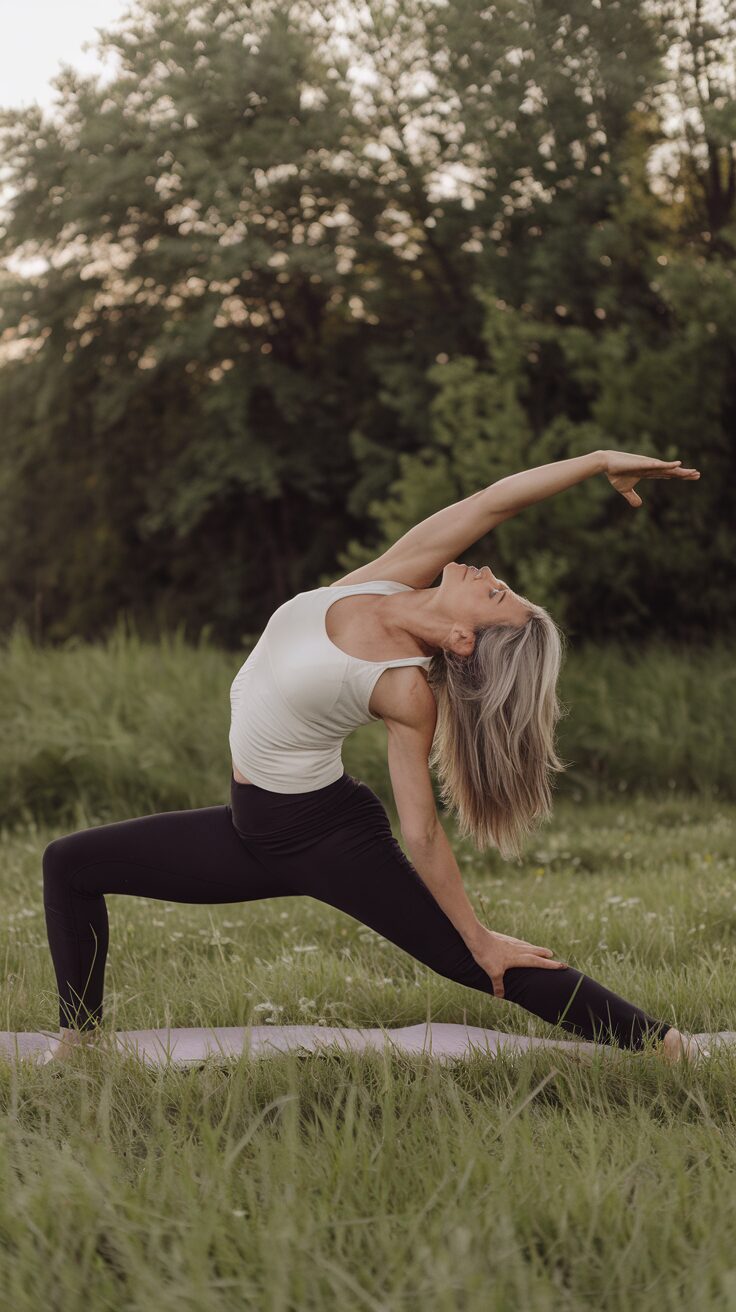
Half Moon Pose is a dynamic balancing posture that challenges your stability and strengthens your entire body. As you enter this pose, you'll notice its benefits to your core, legs, and even your mind, promoting focus and concentration.
To begin, stand in Triangle Pose, then shift your weight onto your front leg while lifting your back leg parallel to the ground. Reach your top arm toward the sky, ensuring proper alignment.
Maintaining alignment is essential in Half Moon Pose. Keep your hips stacked and your shoulders open, avoiding any twisting. If you're feeling wobbly, try using a block under your bottom hand for support; this is a great modification for beginners or those needing extra stability.
There are variations you can explore too. For a deeper stretch, you can bend your top leg and grab your ankle, opening your chest further. Remember to breathe deeply, staying present in the moment.
With practice, you'll find your balance improving, both physically and mentally. Don't rush the process; enjoy each step, and celebrate your progress in mastering this empowering pose.
Dancer's Pose
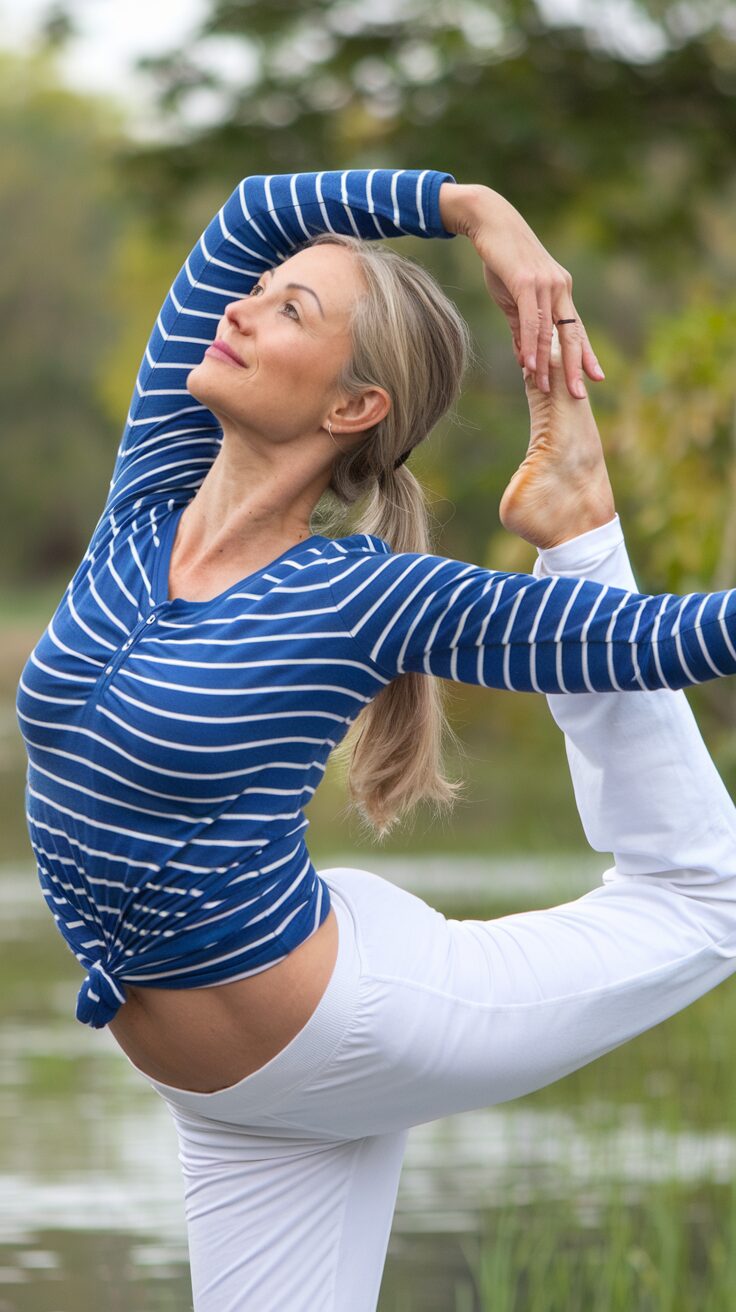
Building on your experience with Half Moon Pose, Dancer's Pose offers another beautiful opportunity to enhance your balance and flexibility. This pose requires a blend of strength, focus, and grace, making it a perfect addition to your yoga practice.
As you prepare, pay close attention to your posture alignment; it's essential for achieving stability.
To get started, find your center by grounding yourself on one leg while you lift the opposite leg behind you. Reach back with the same-side hand to grasp your foot. As you extend your other arm forward, engage your core to maintain balance.
Here are some emotions you might experience while practicing Dancer's Pose:
- A sense of liberation
- The thrill of overcoming challenges
- Joy in fluid movement
- Inner strength and empowerment
- A deeper connection to your body
Remember to practice your balance techniques by focusing on a fixed point in front of you.
With patience and consistent practice, you'll find that Dancer's Pose not only enhances your physical balance but also nurtures your emotional well-being. Embrace the journey, and enjoy the process of growing stronger and more flexible!
Crow Pose
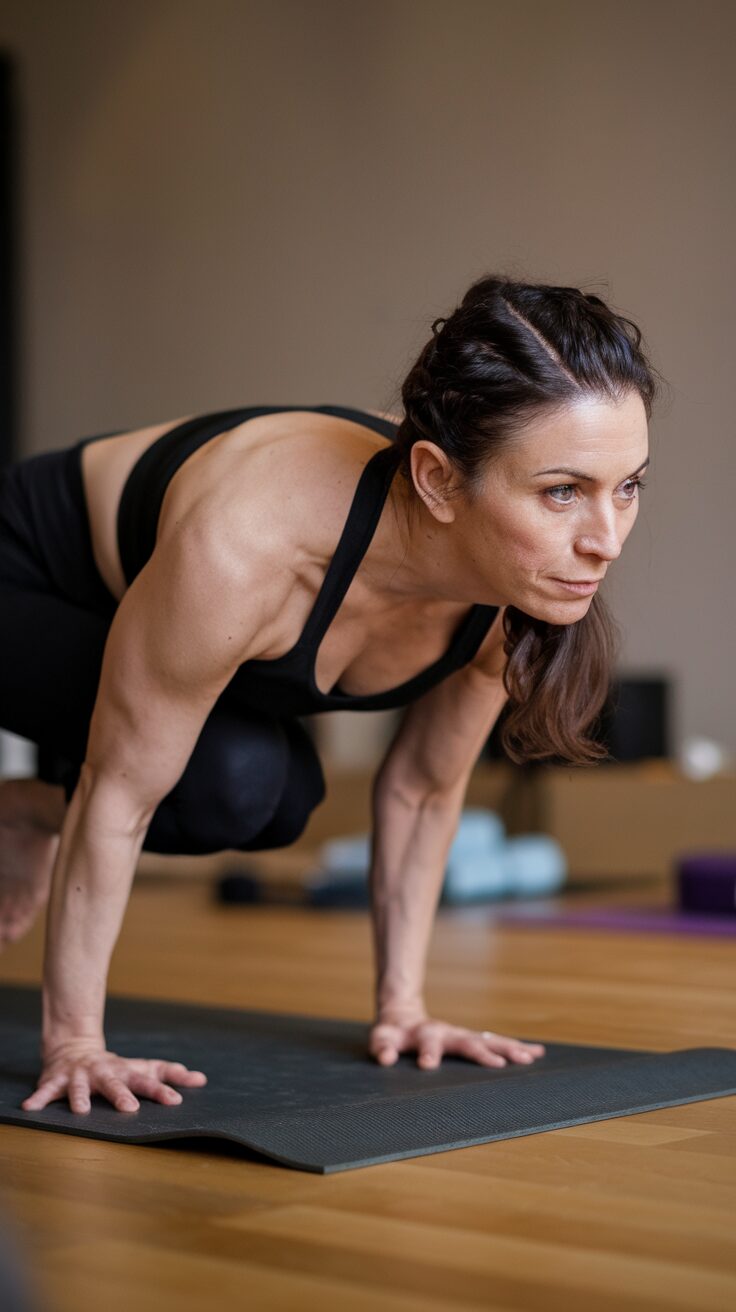
Embrace the challenge of Crow Pose, a dynamic arm balance that strengthens your core and enhances your focus. To get started, squat down with your feet hip-width apart. Place your palms on the mat in front of you, shoulder-width apart. Bend your elbows, creating a shelf for your knees. Lift your hips and lean forward, shifting your weight onto your hands. Engage your core and try to lift your feet off the ground.
Crow Pose benefits extend beyond physical strength. It cultivates concentration, boosts confidence, and encourages mindfulness. As you practice, you'll notice improved body awareness and balance.
If you're new to this pose, start with crow pose variations. Try the beginner's option by keeping your toes on the floor for support. As you gain strength, explore the full expression of Crow by lifting both feet off the ground.
You can also experiment with different arm positions, like using a block under your hands for extra height.
Standing Forward Bend
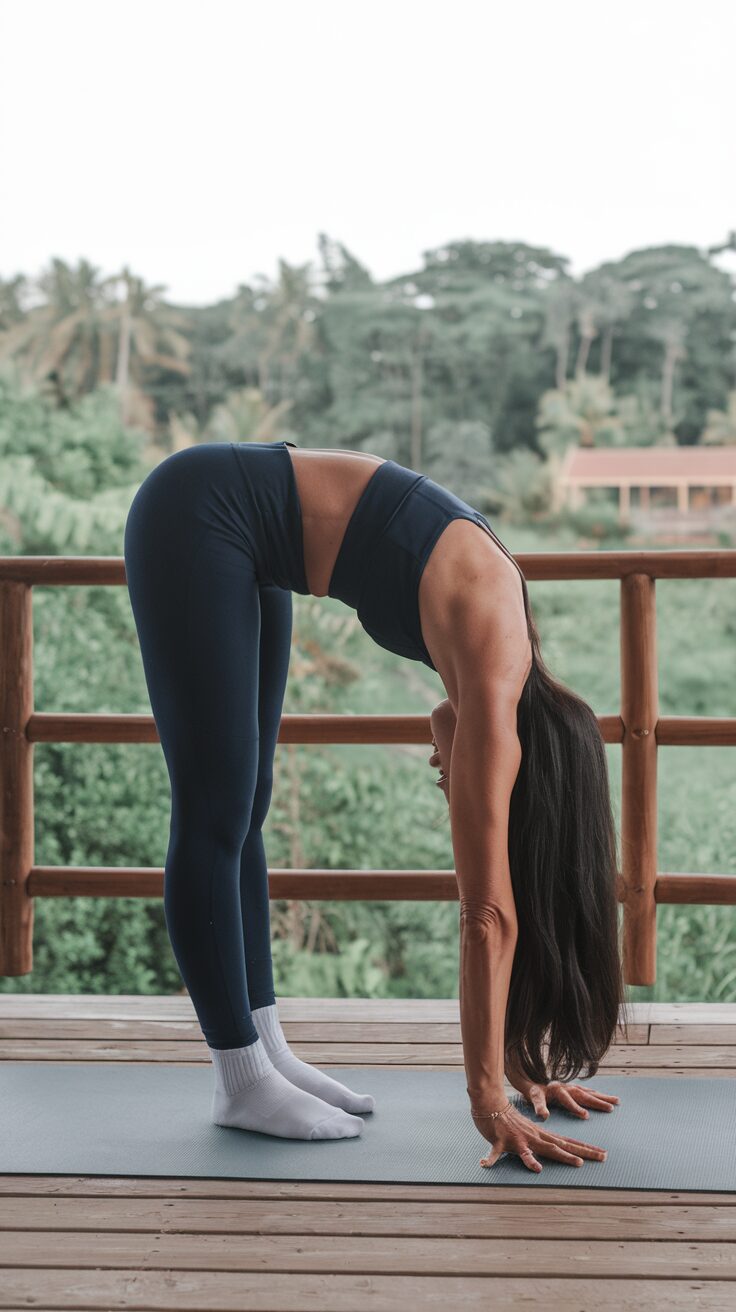
After mastering the strength and focus of Crow Pose, you're ready to explore Standing Forward Bend, a pose that invites relaxation while stretching your hamstrings and spine. This pose not only improves flexibility but also calms the mind and relieves stress.
Here's a quick benefits overview:
- It lengthens your spine, promoting better posture.
- You'll release tension in your neck and shoulders.
- It energizes your body, fostering a sense of rejuvenation.
- You'll cultivate a deeper connection to your breath.
- It encourages mindfulness, grounding you in the present.
To guarantee proper alignment, here are some alignment tips: Keep your feet hip-width apart, bend slightly at your knees if needed, and hinge at your hips rather than rounding your back.
Allow your head to hang heavy, releasing any tension. You can place your hands on the ground or grab opposite elbows for added support.
As you practice Standing Forward Bend, remember to embrace the moment and feel the stretch. This pose is a beautiful way to balance strength and surrender, inviting you to let go and simply be.
Enjoy the journey!
Frequently Asked Questions
How Can I Improve My Balance in Daily Activities?
To improve your balance in daily activities, practice balance techniques like standing on one foot. Incorporate daily mindfulness, focusing on your body's movements. This awareness enhances stability, helping you navigate life with greater ease and confidence.
What Are the Benefits of Balancing Poses for Beginners?
Balancing poses help you build strength and stability, improving your overall coordination. For beginners, focus on balance techniques like engaging your core and finding a focal point. These tips enhance your practice and boost confidence in daily activities.
Can Balancing Poses Help With Core Strength?
Did you know that 70% of individuals improve core stability through balance training? By practicing balancing poses, you'll enhance your core strength, providing a solid foundation for overall fitness and better posture. Keep it up!
Are There Modifications for Balancing Poses for Seniors?
Yes, there are modifications for seniors. You can use adaptive equipment like chairs or blocks for support. Always prioritize safety considerations, and don't hesitate to take it slow. Remember, every small adjustment counts toward your progress!
How Often Should I Practice Balancing Poses for Best Results?
To see real progress, you should practice balance training at least three times a week. Consistent effort helps improve your stability and confidence. Remember, every session counts towards building a stronger foundation for your balance.
Conclusion
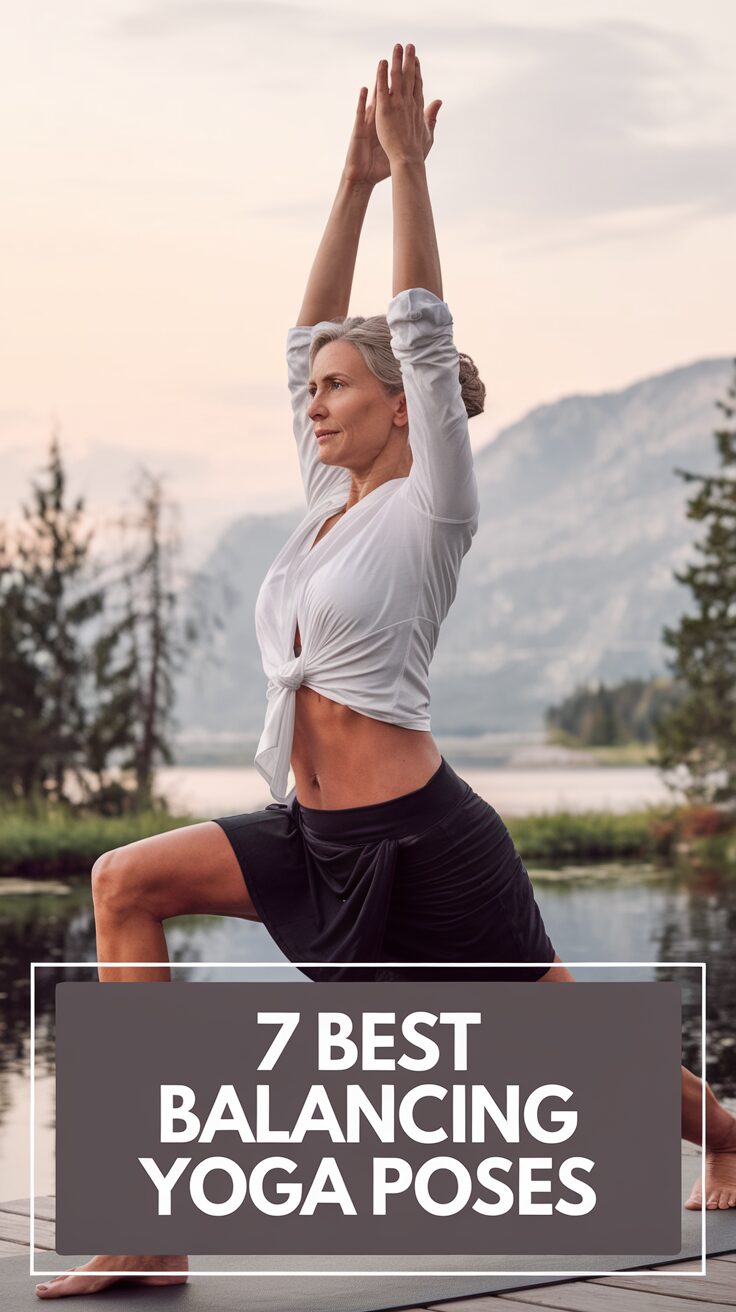
Mastering these seven balancing yoga poses can transform your practice into an exhilarating journey of strength and grace! Imagine standing like a mighty tree, soaring through the air like a dancer, or conquering gravity like a crow. Each pose not only sharpens your physical balance but also elevates your spirit to new heights. So, roll out your mat, embrace the challenge, and feel the incredible empowerment that comes with each breath. You're about to release your inner warrior!
Keep reading

5 Amazing Black and White Kitchen Ideas You Need to See
Never settle for a dull kitchen when these stunning black and white designs can transform your space into a masterpiece.

Can I Get A Mobility Car On Standard Rate Pip - An Expert Guide
Find out why standard PIP mobility payments won't qualify for Motability cars, but discover alternative solutions that could transform your transportation options.
Best Best Mobility Scooter Uk
Browse top-rated UK mobility scooters from leading brands, discovering essential features that guarantee comfort and independence for your lifestyle.
Need personal guidance?
Talk to an advisor
Our care experts are here to help you make the right choice — for free.