20 Amazing Japanese Apartment Decor Ideas You Need to See
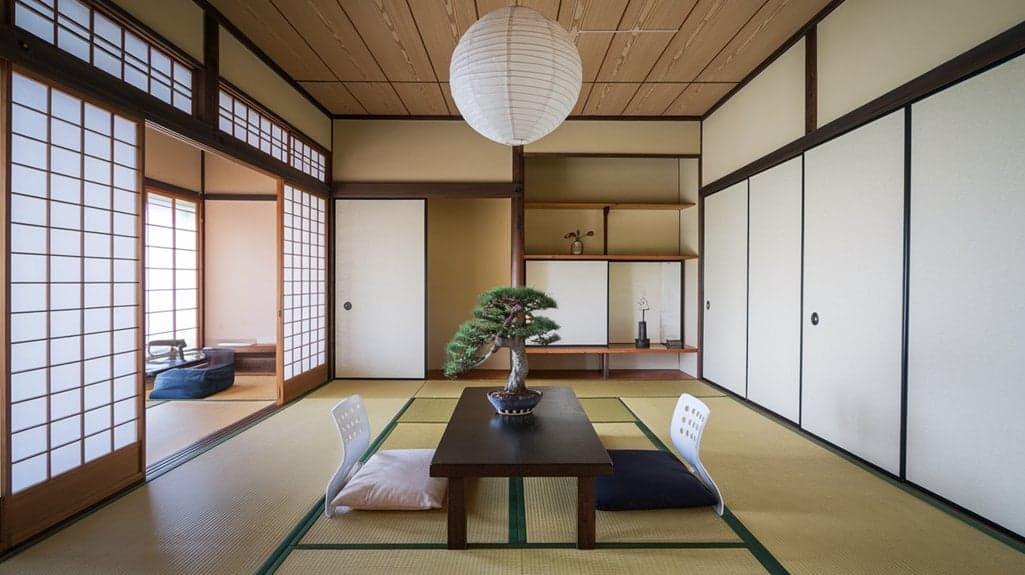
Transform your apartment into a serene Japanese haven with these stunning decor ideas. You'll love incorporating shoji screens, natural wood elements, and minimalist storage solutions that maximize your space. Add tranquility with indoor plants, soft lighting, and traditional touches like tatami mats and low-profile furniture. Create a peaceful atmosphere using neutral colors, water features, and carefully curated decorative pieces. Let's explore how these beautiful elements can bring harmony to your home.
Key Takeaways
- Incorporate sliding shoji screens and tatami mats to create flexible living spaces while maintaining authentic Japanese aesthetics.
- Use low-profile furniture and hidden storage solutions to maximize space and create a minimalist, uncluttered environment.
- Add natural elements like bamboo accents, indoor plants, and wooden furniture to bring tranquility and organic warmth.
- Create a dedicated meditation or tea ceremony corner with a chabudai table and traditional cushions.
- Balance empty spaces with carefully chosen decorative elements like paper lanterns, calligraphy, and vintage kimono fabric art.
Incorporate Shoji Screens and Sliding Doors
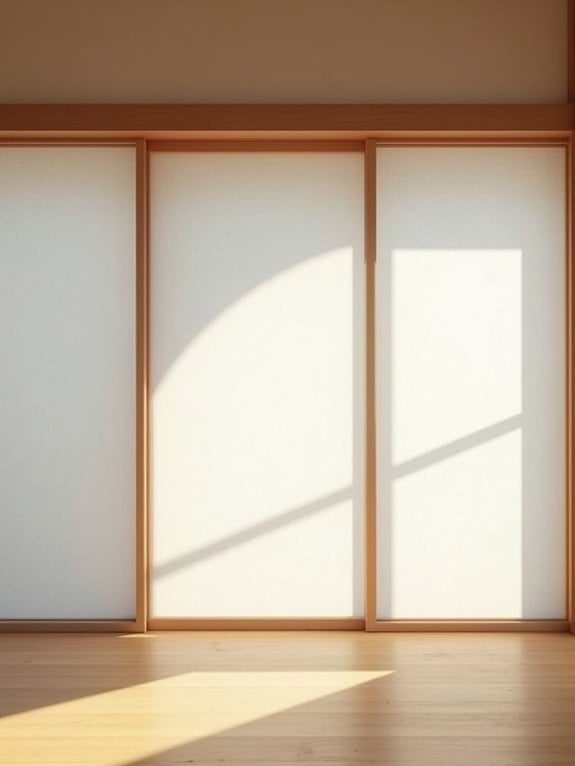
While traditional Japanese homes have long embraced the beauty of shoji screens and sliding doors, you'll find that these elegant features work wonderfully in modern apartments too. These versatile room dividers can transform your space, creating separate areas while allowing natural light to filter through their translucent paper panels. You'll love how they seamlessly blend form and function, offering privacy when needed and opening up to create an airy, spacious feel. Consider installing shoji screens between your living room and bedroom, or use them as closet doors to add authentic Japanese charm to your apartment's design. Following the principles of wabi-sabi design, these screens embrace both simplicity and natural imperfection in their aesthetic appeal.
Master the Art of Minimalist Storage Solutions

Since Japanese design philosophy emphasizes the beauty of empty space, you'll find that clever storage solutions are essential for maintaining a clutter-free apartment.
Try incorporating multi-functional furniture like storage ottomans and beds with built-in drawers. You'll love how traditional tansu cabinets can maximize vertical space while adding authentic charm. Install sleek floating shelves that keep items off the floor, and use slim storage boxes that slide neatly under furniture. Clear containers help you quickly find what you need, while woven baskets add warmth to your organized space. Remember, every item should have its dedicated spot, making it easier to maintain that peaceful, uncluttered atmosphere you're aiming for. Drawing inspiration from shoji screens, these translucent room dividers can double as innovative storage solutions while maintaining the natural flow of light.
Embrace Natural Wood Elements

Natural wood elements form the heart and soul of authentic Japanese interior design, bringing warmth and tranquility to your living space. You'll find endless ways to incorporate this timeless material, from exposed wooden beams to elegant bamboo screens that filter soft light throughout your rooms.
Consider adding wooden furniture pieces with clean lines, like a low-profile coffee table or traditional chabudai dining table. Don't forget smaller touches, such as cedar organizers for your closet or handcrafted wooden bowls. You can even transform your bathroom into a spa-like retreat with a hinoki wood bath mat that releases calming aromatherapy scents. The wabi-sabi design principle celebrates the natural imperfections and unique grain patterns found in wooden elements, creating spaces that feel both authentic and lived-in.
Create a Traditional Tatami Room

To experience authentic Japanese living, transforming a spare room into a traditional tatami space will bring incredible serenity and versatility to your apartment. Begin by installing genuine tatami mats, which are made from woven rush grass and provide a soft, fragrant foundation. You'll love how these natural mats feel beneath your feet.
Add sliding shoji screens to create flexible room divisions and gentle light filtering. Include a low table (chabudai) and floor cushions (zabuton) for comfortable dining and relaxation. When it's time for rest, simply roll out a plush futon mattress onto your tatami floors. Your new space will adapt effortlessly from day to night.
Consider incorporating natural wood elements and minimalist decor to achieve the perfect balance of warmth and simplicity found in Japandi design.
Design a Zen-Inspired Reading Nook

Building on the peaceful atmosphere of your tatami room, a cozy reading nook can become your favorite spot for quiet reflection. Transform a corner of your space with a comfortable floor cushion, called a zabuton, and lean it against a simple bamboo mat or shoji screen. Add soft, natural lighting with a paper lantern or LED candles, and include a small wooden shelf for your books and tea.
You'll love how a small potted bonsai or bamboo plant brings life to your nook, while a lightweight throw blanket in neutral tones adds warmth. Keep the area clutter-free to maintain that serene, zen feeling you're after. The principles of wabi-sabi design philosophy encourage embracing imperfection and simplicity in your reading sanctuary.
Install Modern Paper Lantern Lighting

Modern paper lanterns transform Japanese-inspired spaces with their soft, ethereal glow. You'll find various styles, from simple spherical shapes to intricate geometric designs, that'll add instant warmth to your apartment. Choose rice paper lanterns with delicate bamboo frames for a traditional feel, or opt for contemporary versions with LED lights built in.
Place your lanterns strategically to create layers of light - hang them at different heights in corners, above your dining table, or along hallways. You'll love how they cast gentle shadows on your walls, creating a peaceful ambiance that's perfect for unwinding after a busy day.
Add Low-Profile Furniture Pieces

When creating a Japanese-inspired living space, low-profile furniture pieces become essential elements that'll transform your apartment's entire feel. Choose platform beds that sit close to the floor, traditional chabudai tables, and sleek zabuton cushions to create an authentic atmosphere. These pieces not only save space but also promote a peaceful, grounded energy throughout your home.
You'll love how low furniture opens up your room visually, making ceilings appear higher and spaces feel more expansive. To complete the look, opt for minimalist sofas with clean lines, simple storage cabinets, and floor cushions that invite comfortable, relaxed gatherings with family and friends.
Integrate Indoor Plants and Bonsai

To create a serene Japanese-inspired space, natural elements like indoor plants and bonsai trees serve as perfect focal points that'll bring life and tranquility to your apartment. Place small potted bamboo near your window, or add elegant peace lilies to purify the air while complementing your decor.
Consider starting a bonsai collection, beginning with hardy varieties like jade or juniper. You'll find joy in the mindful practice of caring for these miniature trees. Don't forget to include sleek ceramic planters and natural stone dishes that match your space's aesthetic. The gentle greenery will make your apartment feel like a peaceful sanctuary.
Utilize Multi-Functional Room Dividers

Building on the natural harmony of your indoor garden, room dividers offer a beautiful way to define spaces while maintaining the flow of your Japanese-inspired apartment. Traditional shoji screens and modern folding partitions can serve multiple purposes, from creating a cozy sleeping nook to establishing a peaceful home office space.
Choose dividers with built-in storage shelves to display your cherished items and essential belongings. You'll love how these versatile pieces can transform your space throughout the day, adapting to your needs while preserving the clean, minimalist aesthetic that's signature to Japanese design. The translucent panels will also help distribute natural light throughout your home.
Showcase Japanese Textile Art

Japanese textiles bring warmth and artistic beauty to your living space through their intricate patterns and rich cultural heritage. You'll find endless ways to incorporate these stunning pieces, from hanging traditional noren curtains in doorways to displaying vintage kimono fabrics as wall art. Consider adding furoshiki wrapping cloths as decorative table runners, or showcase sashiko-embroidered pillows on your sofa.
Don't hesitate to mix different textile styles, like pairing a bold indigo-dyed tapestry with delicate silk cushions. These textiles not only create visual interest but also tell stories of Japan's crafting traditions, making your apartment feel both culturally rich and personally meaningful.
Implement Smart Space-Saving Solutions

Since living space comes at a premium in modern apartments, mastering the art of space-saving solutions will transform your home into an efficient, peaceful sanctuary.
You'll love how these clever Japanese storage ideas make the most of every square inch while maintaining a serene atmosphere. Here's what you can implement today:
- Install sliding shoji screens to divide rooms flexibly
- Choose multi-functional furniture like kotatsu tables with storage
- Utilize vertical space with tall, slim storage units
- Add built-in closets with fold-away futons and bedding
These solutions aren't just practical—they'll help you create a harmonious living space that feels spacious and organized, bringing joy to your daily life.
Balance Empty Space With Essential Decor

While minimalism lies at the heart of Japanese design, you don't need to create a stark, empty space to achieve harmony in your home. Instead, focus on maintaining a balanced ratio between open areas and carefully chosen decorative elements. Select a few meaningful pieces, like a treasured ceramic vase or a cherished scroll, and give them room to breathe. Place these items thoughtfully, allowing negative space to frame and enhance their beauty. Remember, empty space isn't truly empty - it's an essential design element that creates visual rest and tranquility in your living space, making your carefully curated items stand out even more.
Choose Natural Color Palettes

Natural colors form the foundation of a serene Japanese-inspired space, bringing the peaceful essence of the outdoors into your home. You'll create a harmonious atmosphere by choosing earthy tones that reflect nature's beauty.
- Start with warm beige and soft cream tones for walls and larger surfaces, setting a calming backdrop
- Add gentle browns and warm grays through wooden furniture and natural textiles
- Incorporate muted sage green accents to bring life and liveliness to your space
- Balance everything with touches of charcoal or deep umber for grounding elements
These natural hues work together beautifully, helping you create a tranquil sanctuary that feels both authentic and welcoming.
Feature Bamboo Accents and Details

Bamboo's timeless appeal makes it a perfect choice for adding authentic Japanese charm to your apartment. You'll find countless ways to incorporate this versatile material, from sliding screens and window blinds to decorative vases and tableware. Try placing bamboo plants in corners or using bamboo-framed mirrors to enhance your space's natural elements.
Don't forget smaller accents like bamboo placemats, chopstick holders, or bathroom accessories. You can even install bamboo flooring or wall panels for a bold statement. The material's natural color and texture will blend beautifully with your other Japanese-inspired decor, creating a peaceful, zen-like atmosphere you'll love coming home to.
Design a Peaceful Tea Corner

Creating a dedicated tea corner in your apartment doesn't just add beauty - it provides a meaningful space for quiet reflection and relaxation. To design your perfect tea sanctuary, consider these essential elements that embrace Japanese aesthetics and tranquility:
- Place a low chabudai table or bamboo tray on a soft zabuton cushion, creating an inviting spot to kneel or sit
- Display your teaware mindfully, arranging ceramic cups and cast iron teapots on a simple wooden shelf
- Add a small water feature or potted moss for gentle, natural ambiance
- Incorporate soft lighting with a paper lantern or candle to create a serene atmosphere
Incorporate Traditional Japanese Artwork

To breathe authentic Japanese spirit into your living space, traditional artwork serves as a powerful focal point that transforms plain walls into enchanting visual stories. You'll find that hanging a striking ukiyo-e print, with its vibrant scenes of everyday life or dramatic landscapes, instantly creates a mesmerizing atmosphere in any room.
Consider incorporating kakemono scrolls, which you can change seasonally to reflect nature's rhythms. Don't forget about delicate paper fans or kimono fabric pieces, which make stunning wall decorations. For a modern twist, try framing vintage Japanese advertisements or creating a gallery wall that mixes contemporary and traditional pieces.
Create Indoor-Outdoor Flow

Japanese design finds its heart in the seamless connection between indoor and outdoor spaces, making your apartment feel like it's embracing nature itself. To create this harmonious flow in your living space, consider these essential elements:
- Install shoji screens or glass sliding doors that open fully to your balcony or patio, letting natural light flood your space
- Place potted bamboo plants and small bonsai trees near windows to blur the boundaries between inside and outside
- Use natural materials like wood and stone in your flooring and furniture choices
- Add a small water feature or zen garden to create a peaceful passage zone
Add Stone and Water Elements

When bringing tranquility into your apartment, stone and water elements work together to create a serene, spa-like atmosphere that'll make you feel instantly at peace. Try placing a small tabletop fountain on your coffee table, where the gentle sound of flowing water can melt away stress after a long day.
Incorporate natural stones and pebbles in decorative bowls, or line your windowsills with smooth river rocks. You can also add a zen garden with fine sand and carefully arranged stones, perfect for mindful meditation. These elements don't need much space but will transform your apartment into a peaceful sanctuary.
Style With Japanese Ceramics

Beautiful ceramic pieces serve as the heart of authentic Japanese decor, bringing timeless elegance and artistic flair to your living space. You'll find that incorporating traditional ceramics adds depth and cultural richness to your apartment's atmosphere.
- Display handcrafted tea sets on a low wooden table, creating an inviting spot for mindful moments
- Place decorative vases with seasonal branches in alcoves or corners to draw the eye upward
- Use ceramic bowls in earthy tones for both practical storage and artistic appeal
- Arrange small pottery pieces on floating shelves, letting each item's unique glazing tell its story
Layer Textures With Natural Fibers

Natural fibers bring essential warmth and depth to your Japanese-inspired apartment, creating layers of inviting texture that'll make you feel instantly at home. Start with a plush tatami mat as your foundation, then add woven bamboo screens for privacy and visual interest. You'll love how jute or sisal rugs define your spaces while introducing earthy elements to your rooms.
Don't forget to incorporate cotton and linen fabrics through cushions, throws, and curtains. These breathable materials aren't just beautiful - they're practical too. Layer different weaves and weights to create a cozy, multidimensional space that captures authentic Japanese style.
Keep reading

20 Latest Crochet Neck Warmer Ideas To Try In 2025!
Link up with the 20 best crochet neck warmers that blend warmth and style—discover which designs will transform your winter wardrobe!

20 Amazing Crochet Jewelry Ideas
Amazing crochet jewelry ideas await you, featuring unique designs that will inspire your creativity and elevate your accessory game to new heights.

20 Amazing Crochet Kit Ideas
Navigate through 20 amazing crochet kit ideas that spark creativity and joy; discover the perfect project to ignite your crafting passion!
Need personal guidance?
Talk to an advisor
Our care experts are here to help you make the right choice — for free.